
Becoming a nun is a unique and deeply spiritual journey for women who feel called to dedicate their lives to God. Nuns also known as sisters, live a life of prayer, service and community, guided by the principles of their religious order. For those who feel a calling, understanding the process, requirements, lifestyle, and the significance of nuns outfits and ladies clergy wear is essential. In this guide, we will explore everything you need to know about becoming a nun, from prerequisites and formation stages to convent life, attire, and practical considerations.
Who is a Nun?
A nun is a woman who chooses to live a religious life. She follows God, prays, and works for the community. Nuns often take special promises called vows, which usually include:
- Poverty – living simply without owning many things.
- Chastity – staying single and not marrying.
- Obedience – following the rules of her religious community.
Some nuns are called sisters, and the main difference is that sisters work actively in schools, hospitals, and communities, while nuns may live a more quiet, prayerful life in a convent.
Nuns vs. Sisters:
- Nuns: Typically cloistered and live in monasteries or convents, dedicating most of their lives to prayer and contemplation. They rarely leave the convent.
- Sisters: Often called “active nuns,” they live in communities but also work in education, healthcare, social services, or missionary activities.
Nuns come from many religions, but most in the United States are Catholic nuns. Other religions like Buddhism and Orthodox Christianity also have nuns.
What Do Nuns Do?
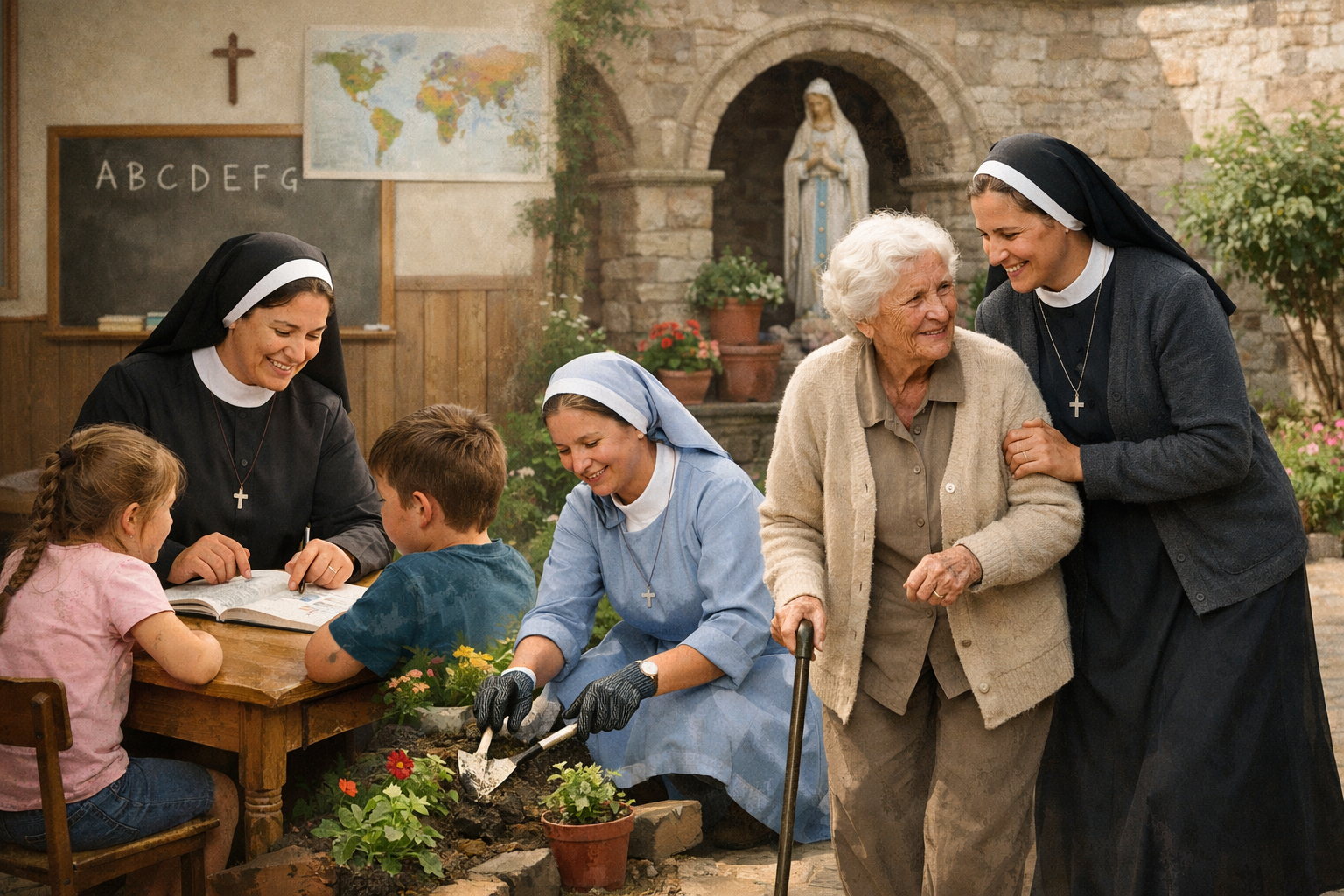
Nuns do many things depending on their order and religion. Some spend most of their time praying, while others work in schools, hospitals, or help the poor. Some nuns teach, care for sick people or do social work.
Every nun has a daily routine. A typical day may include:
- Waking up early in the morning.
- Praying with the community.
- Eating breakfast together.
- Doing work or helping people.
- Praying again in the afternoon.
- Having dinner.
- Evening activities like studying, crafts, or more prayer.
- Going to bed after night prayers.
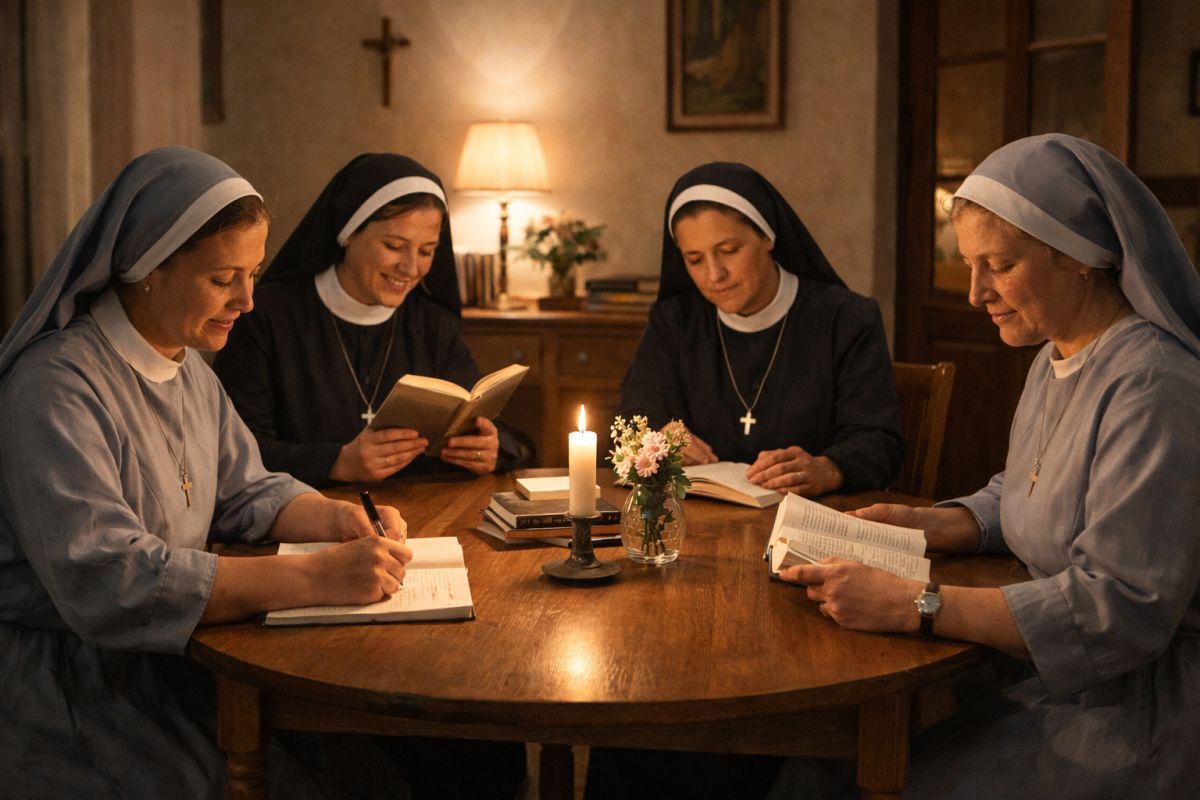
Nuns live in communities like a big family. They share responsibilities, help each other, and support one another spiritually.
Morning: Prayer and Reflection
The day of a Catholic nun usually starts early in the morning. Prayer is central to her life and helps maintain a spiritual connection with God.
- Early Morning Prayers: Most nuns wake up around 5:00 or 5:30 AM to pray the Liturgy of the Hours, meditate, or read scripture.
Mass and Devotions: Many attend daily Mass or engage in Eucharistic adoration. - Breakfast: Meals are shared with the community, providing time for fellowship.
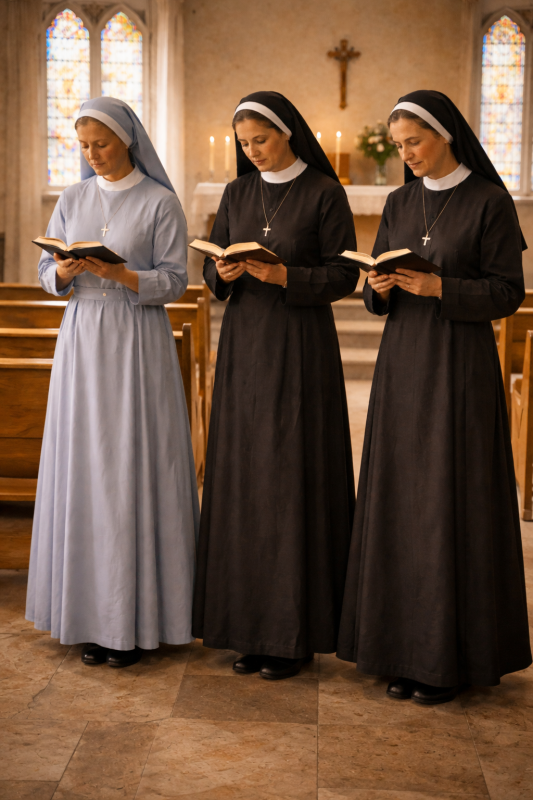
During this time, nuns usually wear their nuns outfits or habits, which may include a tunic, veil, scapular, and simple shoes. Nun attire is not just clothing, it represents dedication, humility, and simplicity.
Daily Work and Ministry
After morning prayer and breakfast, nuns begin their daily work. Depending on the order, this work may include:
- Teaching: Many sisters work in schools, teaching children and young adults.
- Healthcare: Some nuns serve in hospitals, clinics, or care for the sick and elderly.
- Community Service: Helping the poor, feeding the hungry, or supporting social programs.
- Household Duties: Cleaning, cooking, gardening, and maintaining the convent.
Even in these tasks, the nuns habit serves as a reminder of their vow of humility and service. For nuns engaged in more public or formal ministry, ladies clergy wear may be used, including professional clergy shirts, robes, or dresses suitable for church services.
Midday: Prayer and Meals
The middle of the day is another time for reflection and prayer. Many nuns return to the chapel for:
- Midday Prayers: Pausing work to reconnect spiritually.
- Lunch: Shared meals foster community and bonding among sisters.
Even at work or meals, the dress of a nun maintains modesty and simplicity. Traditional habits are common in many convents, while modern orders may allow simplified or more practical attire.
Afternoon: Study, Skills, and Service
In the afternoon, nuns often dedicate time to:
- Studying Religious Texts: Learning more about scripture, theology, or the order’s mission.
- Crafts or Skill Development: Sewing, baking, or preparing religious items.
- Social Work and Ministry: Visiting hospitals, schools, or community centers.
The purpose of a nun is not just prayer, it includes practical service and sharing God’s love through work. Wearing the proper nun attire ensures they maintain professionalism and modesty in all environments.
Evening: Community and Reflection
Evening is for spiritual growth and communal bonding:
- Evening Prayers (Vespers): A time for reflection on the day.
- Community Meetings: Planning activities or discussing the convent’s work.
- Dinner: A shared meal that reinforces unity.
- Personal Reflection: Time for meditation, journaling, or reading spiritual books.
Nuns live like a family, supporting each other emotionally, spiritually, and practically.
How Become a Nun
Many women feel a calling from God and wonder how to become a nun. It starts with prayer, learning about religious orders, and taking steps like postulancy, novitiate, and eventually making vows of poverty, chastity, and obedience. The main steps are:
1. Prayer and Discernment
The first step is to pray and ask God if He is calling you to this life. Spend time reading the Bible, reflecting, and attending church. It is important to be patient and listen to your heart.
2. Meeting Nuns and Visiting Convents
Next, you should meet real nuns. Visit convents, attend retreats, or volunteer in religious communities. This helps you understand the life of a nun. Some women do this online by attending virtual retreats or reading blogs by nuns.
3. Talking to a Mentor
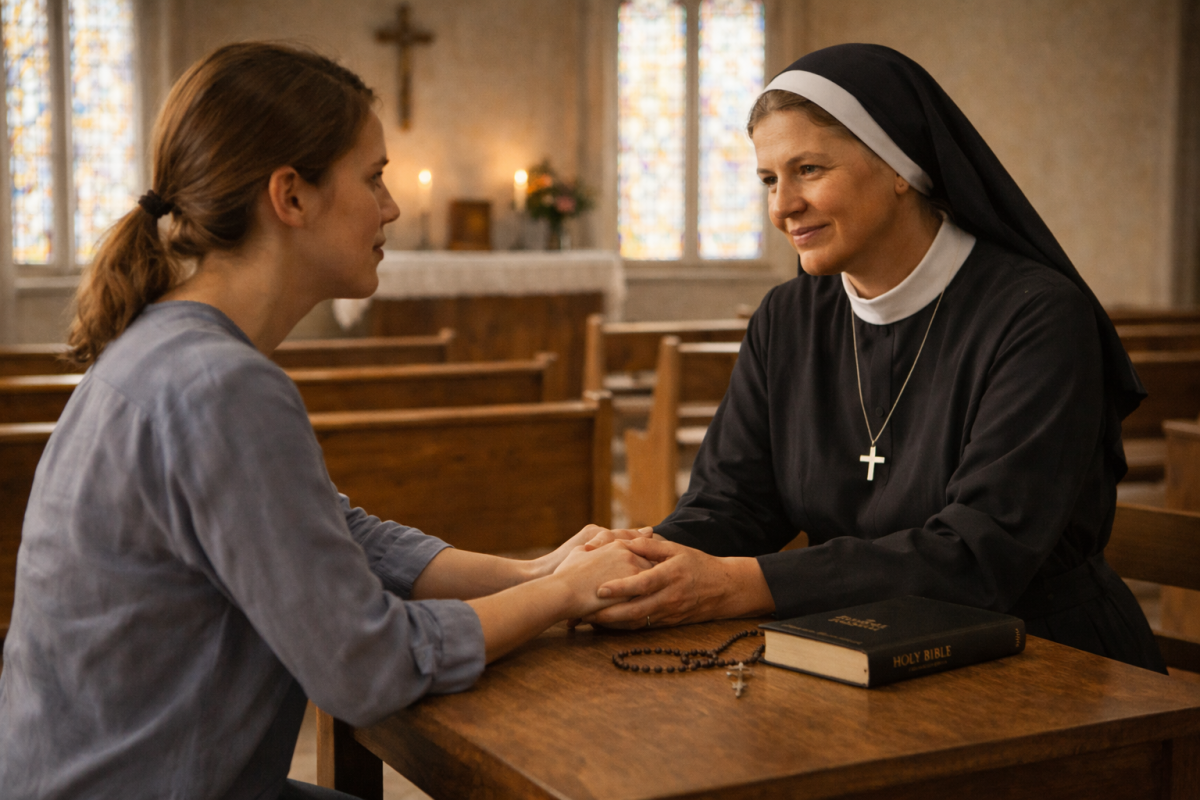
Talk to someone who can guide you, like a priest, spiritual director, or experienced nun. Mentors help you understand your feelings and guide you in your spiritual journey.
4. Contact a Religious Community
When you are ready, contact a religious community. Each community has a Vocation Director, who will guide you through the process. You can attend events, learn about their work, and see if it’s the right fit.
5. Formation Stages
Once accepted, you will go through different stages of formation:
- Aspirancy/Pre-Postulancy – You start learning about the community while living your normal life.
- Postulancy – You officially join the order, live with the community, and take classes.
- Novitiate – You prepare for a life with vows, learning the order’s spirituality and rules.
- Temporary Vows – You take vows for a few years while still discerning your call.
- Perpetual/Solemn Vows – You make a lifelong commitment to God and the community.
Life in a Convent or Monastery
Living in a convent is akin to living in a family, where members share responsibilities, talents, and spirituality.
Daily Schedule
While each order varies, a typical day includes:
- Early morning prayers (Lauds or meditation)
- Breakfast
- Work, ministry, or study
- Midday prayers
- Community meal
- Evening prayers (Vespers) and spiritual study
- Recreation or further apostolic activities
- Night prayers (Compline)
Community Life
Nuns work together, support one another and participate in spiritual and apostolic activities. Community life strengthens their relationship with God and deepens understanding of their order’s mission.
Nuns Outfits and Ladies Clergy Wear
Nuns’ attire, or habits are traditional and modest garments symbolizing devotion, humility, and community life. Other ladies clergy wear is designed for professional ministry or church services and is often more practical while still maintaining modesty and respect for religious traditions.
Typical Nuns Habit
- Full-length tunics, scapulars, veils, and wimples in some orders.
- Color, style, and design vary by community.
- Signifies poverty, simplicity, and devotion.
What Nuns Wear Under Habits
- Usually modest undergarments and simple footwear.
- Some wear additional layers for warmth or comfort.
Why Habits Are Worn
- Habits create uniformity and communal identity.
- Symbolize dedication to God.
- Promote humility and detachment from worldly fashion.
Regional Differences
- For example, nuns in Missouri often wear traditional full habits.
- Modern communities may have simplified attire while retaining symbolic elements.
Ladies Clergy Wear
For women interested in clergy life, there are also ladies clergy wear, which includes shirts, robes, and other clothing suitable for religious work or prayer services.
- Includes clergy shirts, dresses, and robes for female clergy members.
- Often customized to meet liturgical needs while reflecting modesty and professional appearance.
Fantasy Nun Outfits
- Inspired by traditional habits, used in cosplay or costume design.
- Should respect religious symbolism if worn publicly.
How to Apply and Join a Religious Order
- Contact a Vocation Director:
- Acts as your guide through discernment and formal application.
- Provides insight into the community’s lifestyle, charism, and expectations.
- Application Process:
- Paperwork, essays, transcripts, references, medical history, psychological evaluation.
- Mutual discernment continues throughout the process.
- Integration into Community:
- Participate in prayers, apostolate work, and community activities.
- Form spiritual, practical, and emotional skills necessary for religious life.
Leaving an Order
Sometimes, it becomes clear that religious life or a specific community is not a good fit. Leaving before taking perpetual vows is acceptable and part of discernment. Spiritual growth continues outside the order through prayer, service, and community engagement.
Frequently Asked Question
What is a nun?
A nun is a woman who dedicates her life to God through prayer, service, and community living. Nuns can be cloistered or active, depending on the order.
What do nuns wear?
Nuns wear habits, which vary by order. A habit typically includes a tunic, veil, scapular, and wimple. Some communities have modernized attire.
Why do nuns wear habits?
Habits symbolize dedication, modesty, humility, and unity with the community. They remind nuns of their spiritual commitment and separation from worldly distractions.
How to make a fantasy nun outfit?
Fantasy or cosplay nun outfits mimic traditional habits but allow creative liberties. Use modest tunics, veils, and accessories inspired by real nuns’ attire. Respect religious symbolism if worn publicly.
What nuns in Missouri wear full habits?
Traditional orders in Missouri, such as Benedictine or Dominican communities, often wear full-length habits with veils, tunics, and scapulars. Color and style depend on the order.
Catholic priest clothes – how do they relate to nuns?
While priests wear cassocks, clerical collars, and robes, nuns’ habits follow a similar principle: modest, symbolic clothing that reflects religious devotion and professional clergy status.
What is the difference between a sister and a nun?
Nuns are cloistered and dedicate most of their time to prayer, whereas sisters are active and serve the community in education, healthcare, or social work. Both take vows of poverty, chastity, and obedience.
What are nuns not allowed to do?
Nuns typically refrain from marriage, pursuing personal wealth, engaging in secular work outside the community, or leaving their religious obligations. Restrictions vary by order.
Do nuns have to wear habits all the time?
Mostly yes, especially in traditional communities. Some modern orders allow simpler attire for practical tasks but retain symbolic elements.
What do nuns wear under their habits?
Simple undergarments, modest footwear, and sometimes additional layers for warmth or comfort.
What is the purpose of a nun?
Nuns live to serve God through prayer, community life, education, healthcare, and social service. Their purpose is spiritual growth, supporting the Church, and helping others.
Conclusion
A day in the life of a nun is a beautiful balance of prayer, work, and community. From early morning prayers to daily service, nuns live with purpose, guided by their vows and spiritual calling. Their nuns outfits, or habits, are more than clothing—they symbolize humility, devotion, and commitment to God. For women exploring religious life, understanding the role of ladies clergy wear, the formation process, and the responsibilities of a Catholic nun can help discern whether this path is right for them.
Whether engaged in teaching, healthcare, social work, or contemplative prayer, nuns dedicate themselves fully to service, faith, and community. The life of a nun is challenging yet deeply fulfilling, providing a unique opportunity to grow spiritually while helping others. By embracing the discipline, simplicity, and devotion symbolized in the dress of a nun, every day becomes a meaningful expression of faith, love, and dedication.






Recent Comments