


Premium Graceful Bishop’s Cassock
Original price was: $ 450.00.$ 339.99Current price is: $ 339.99.
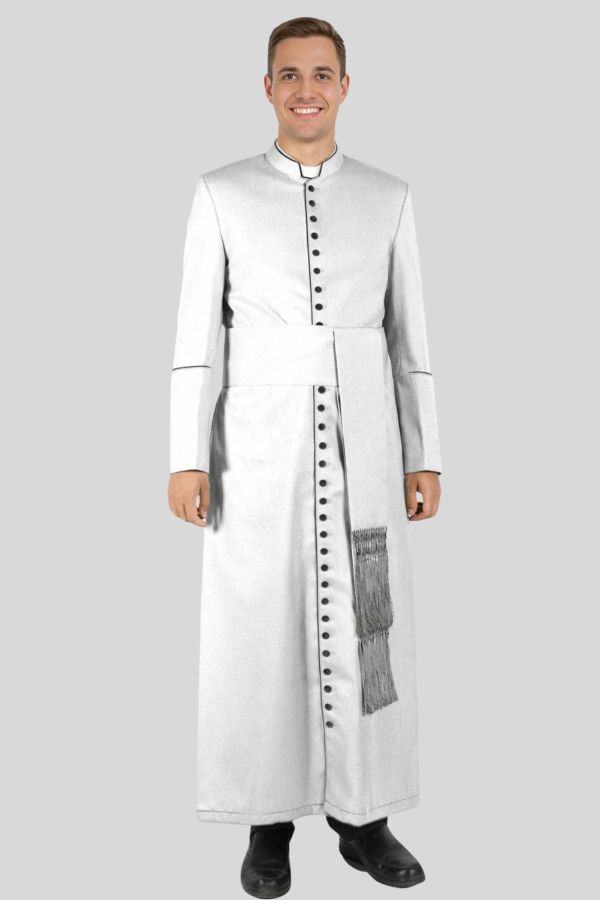
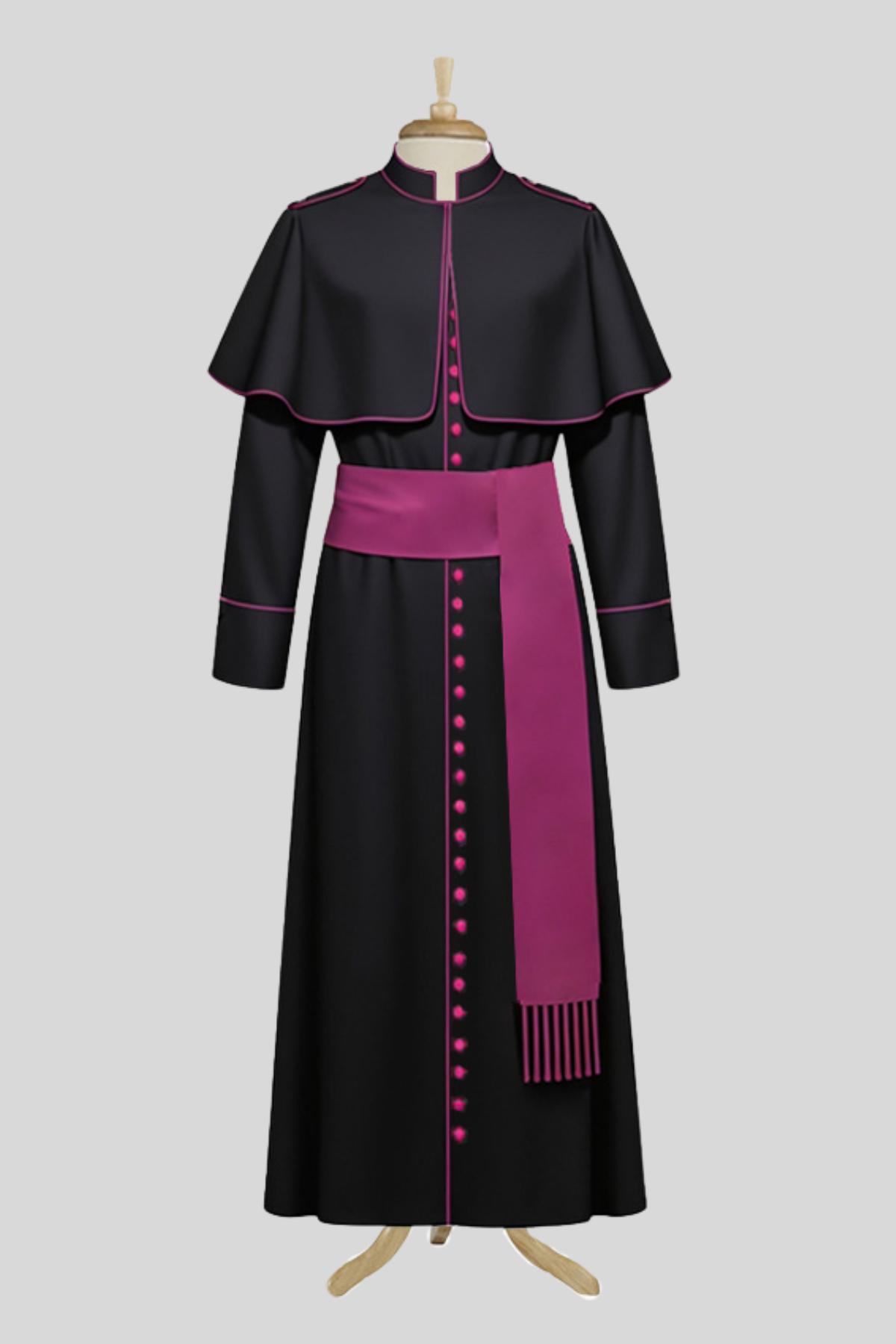
- Made from premium tropical fabric for year-round comfort and durability.
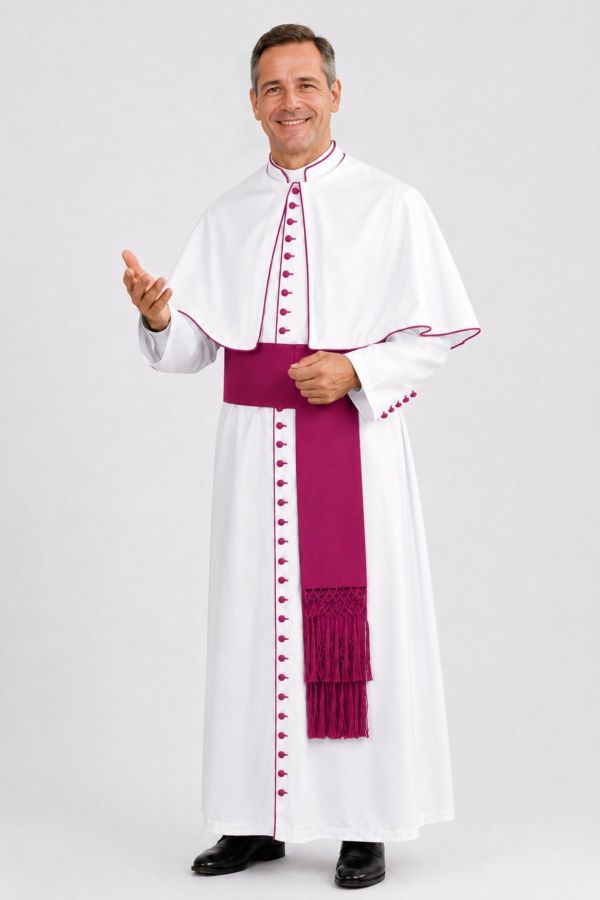
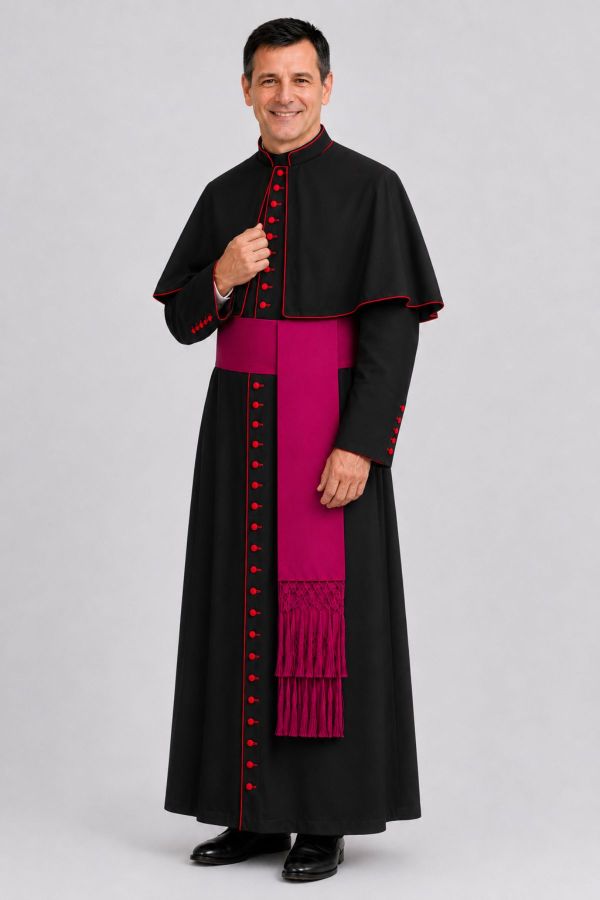
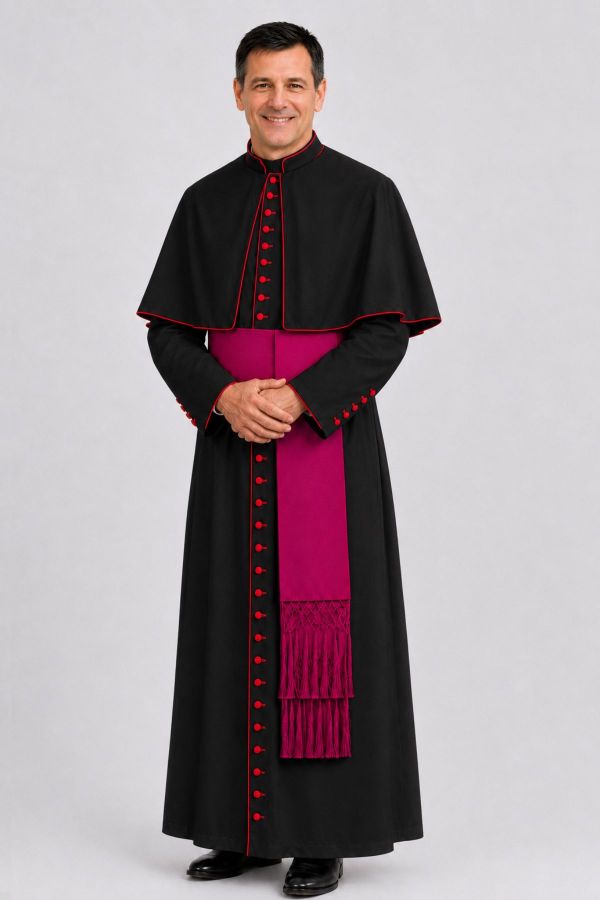
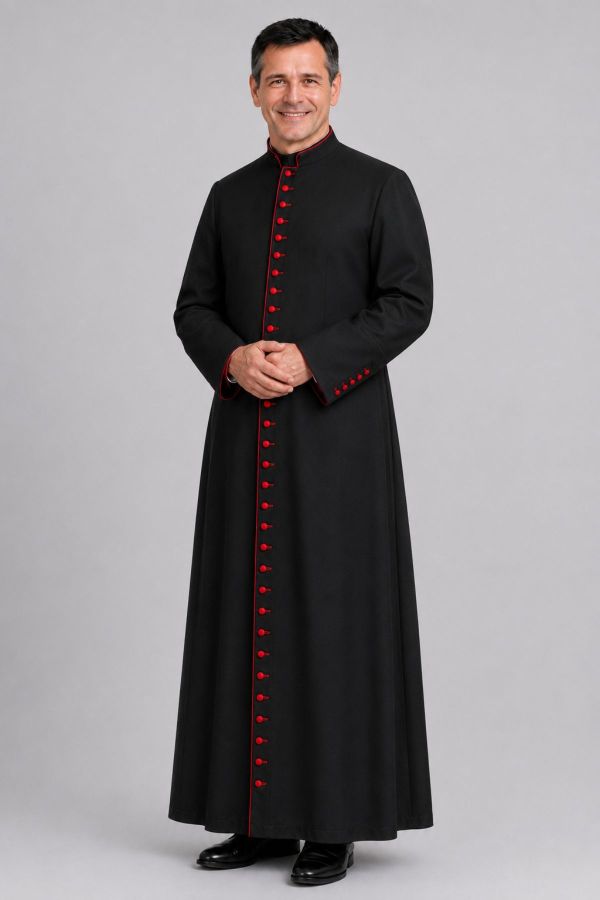
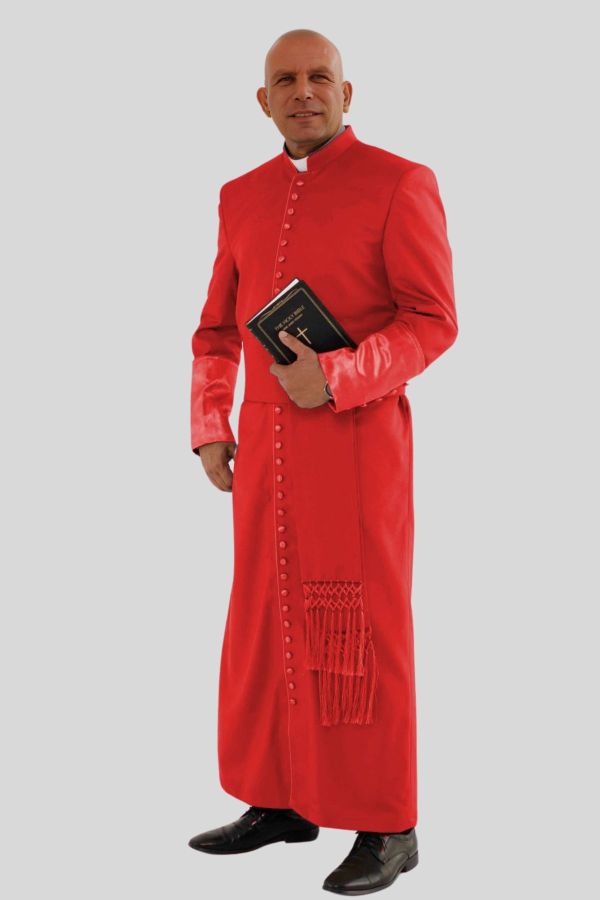
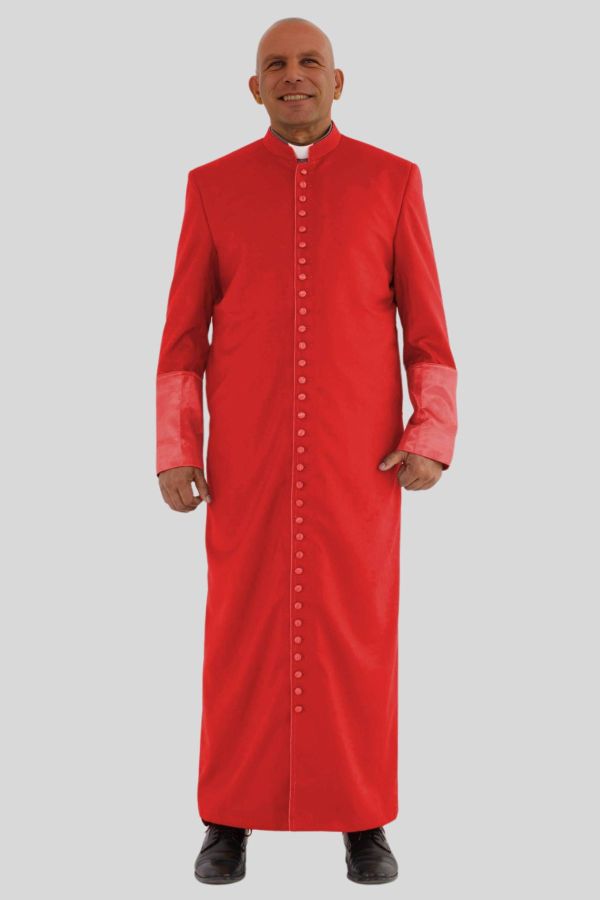
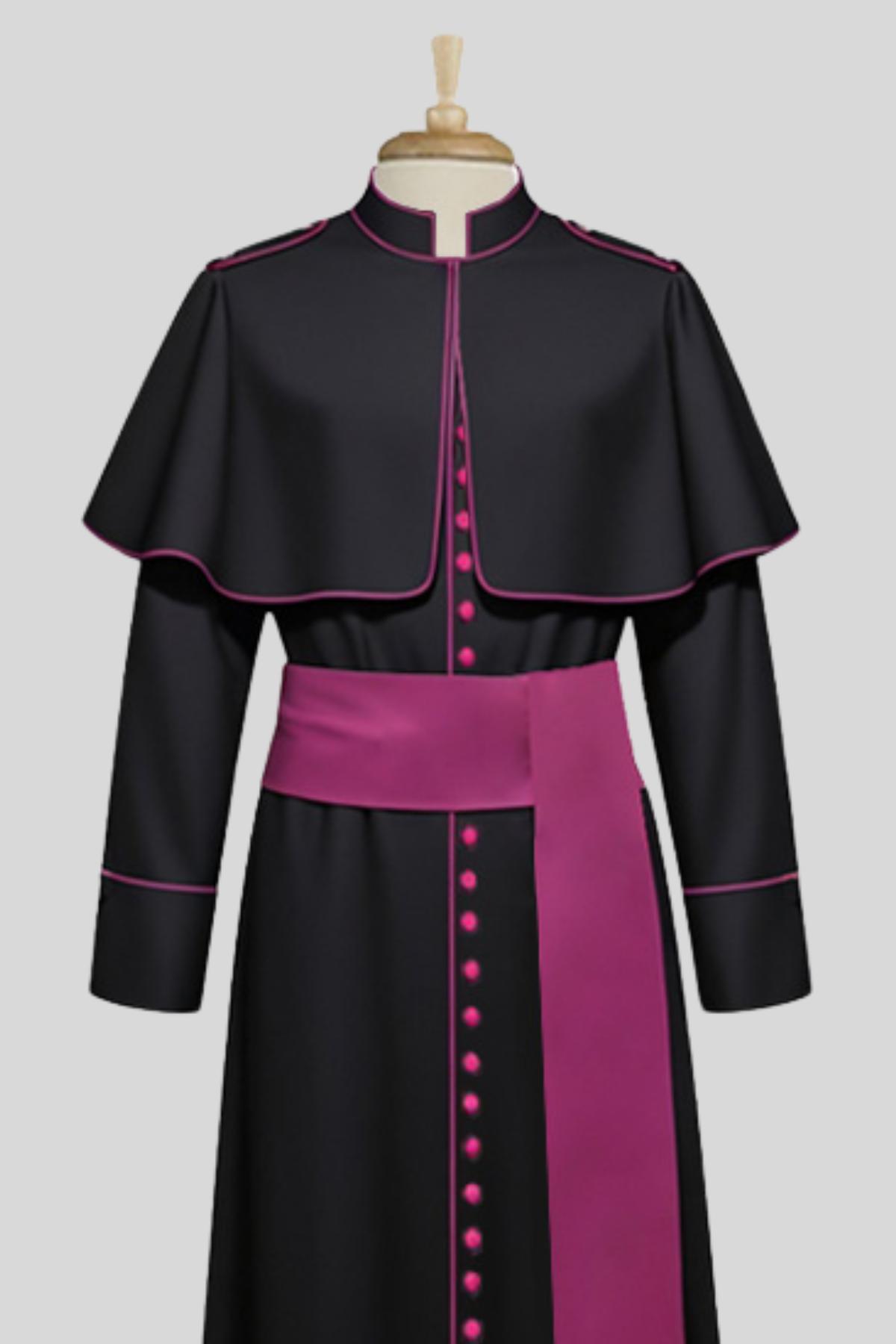
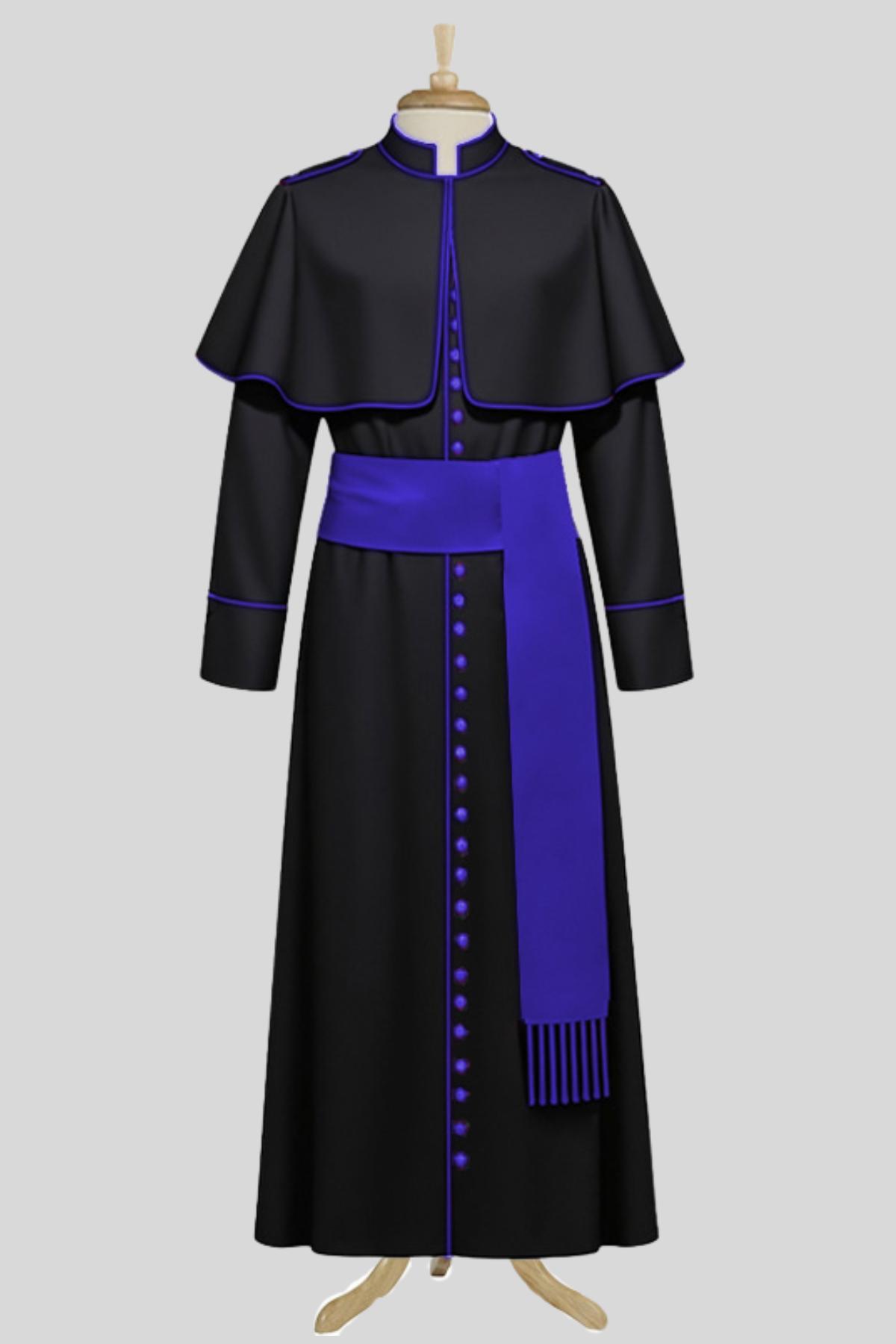
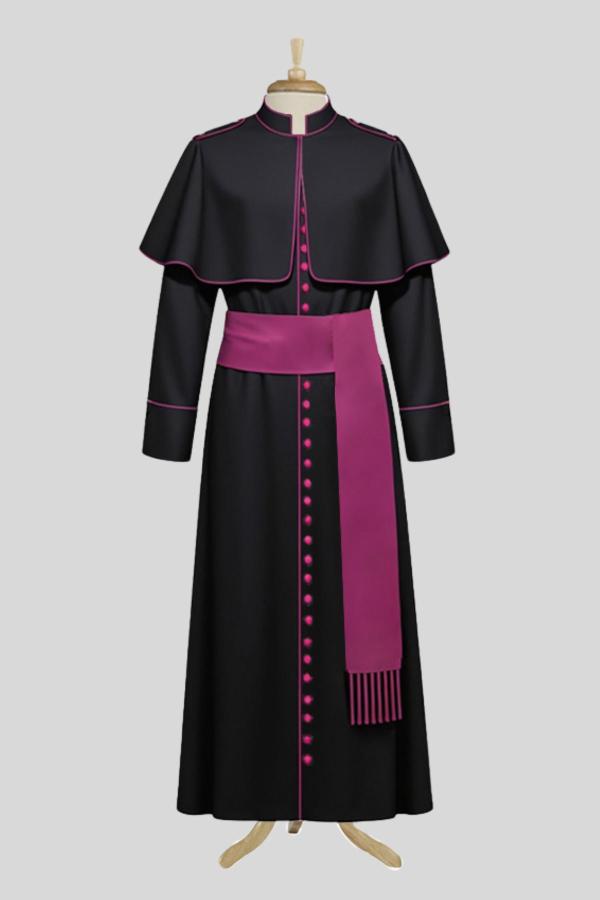
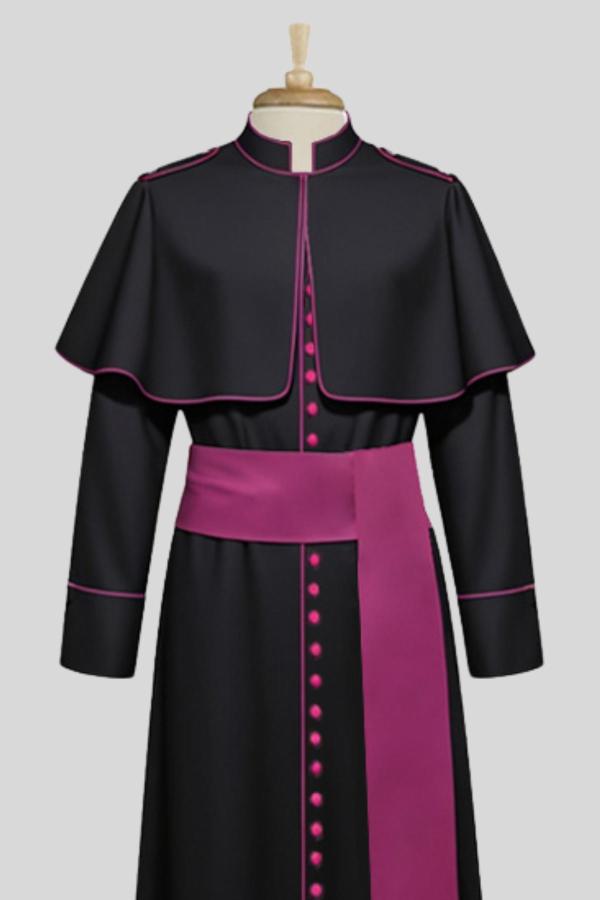
- Embellished with stylish pink cord trim and 33 satin-covered buttons.
- Designed with three backplates to enhance structure and elegance.
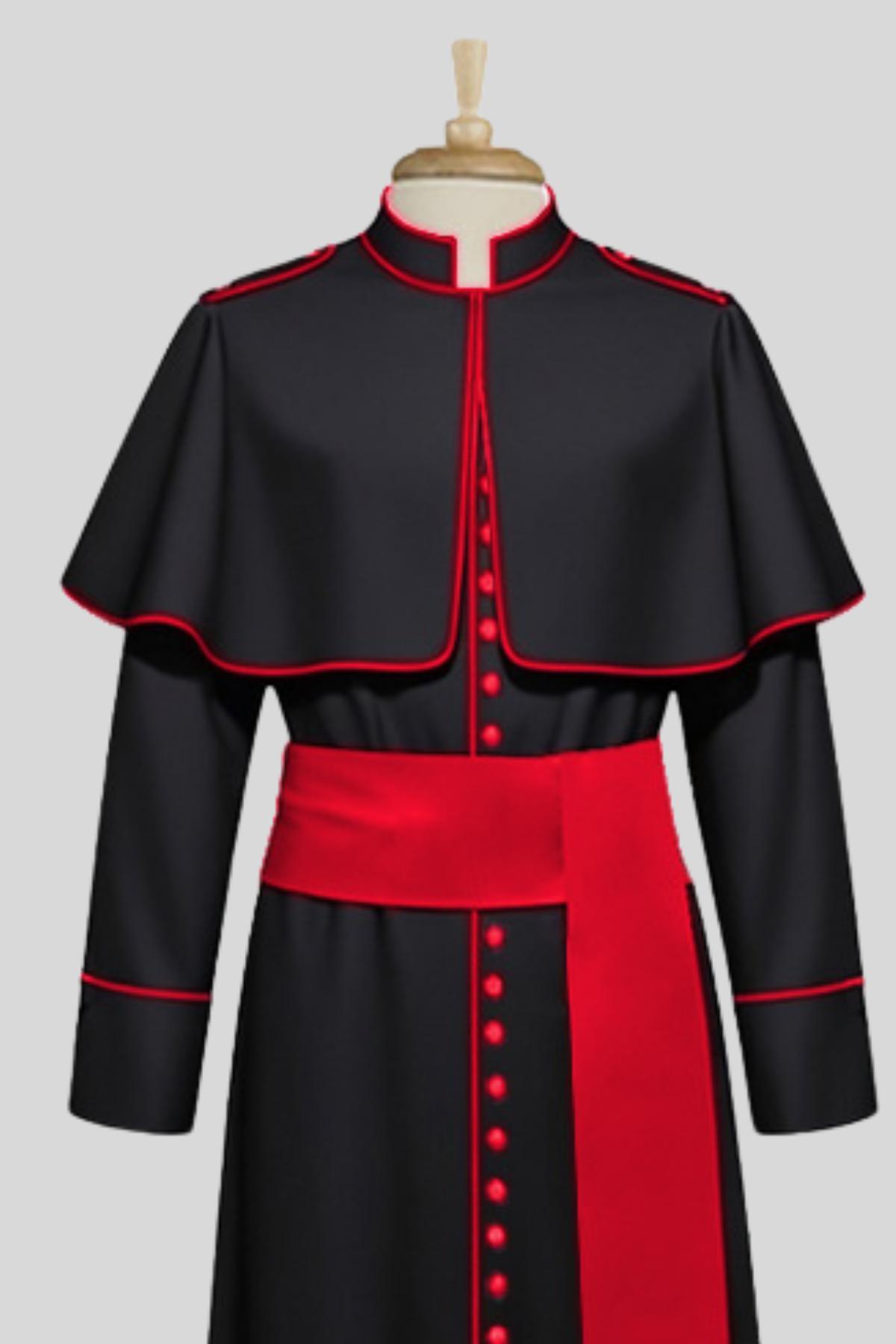
- Classic shoulder buttons on both sides add a traditional touch.
- Cincture ends are detailed with elegant finishing for added distinction.
- Features two inner breast pockets and two side-opening pockets for practicality.
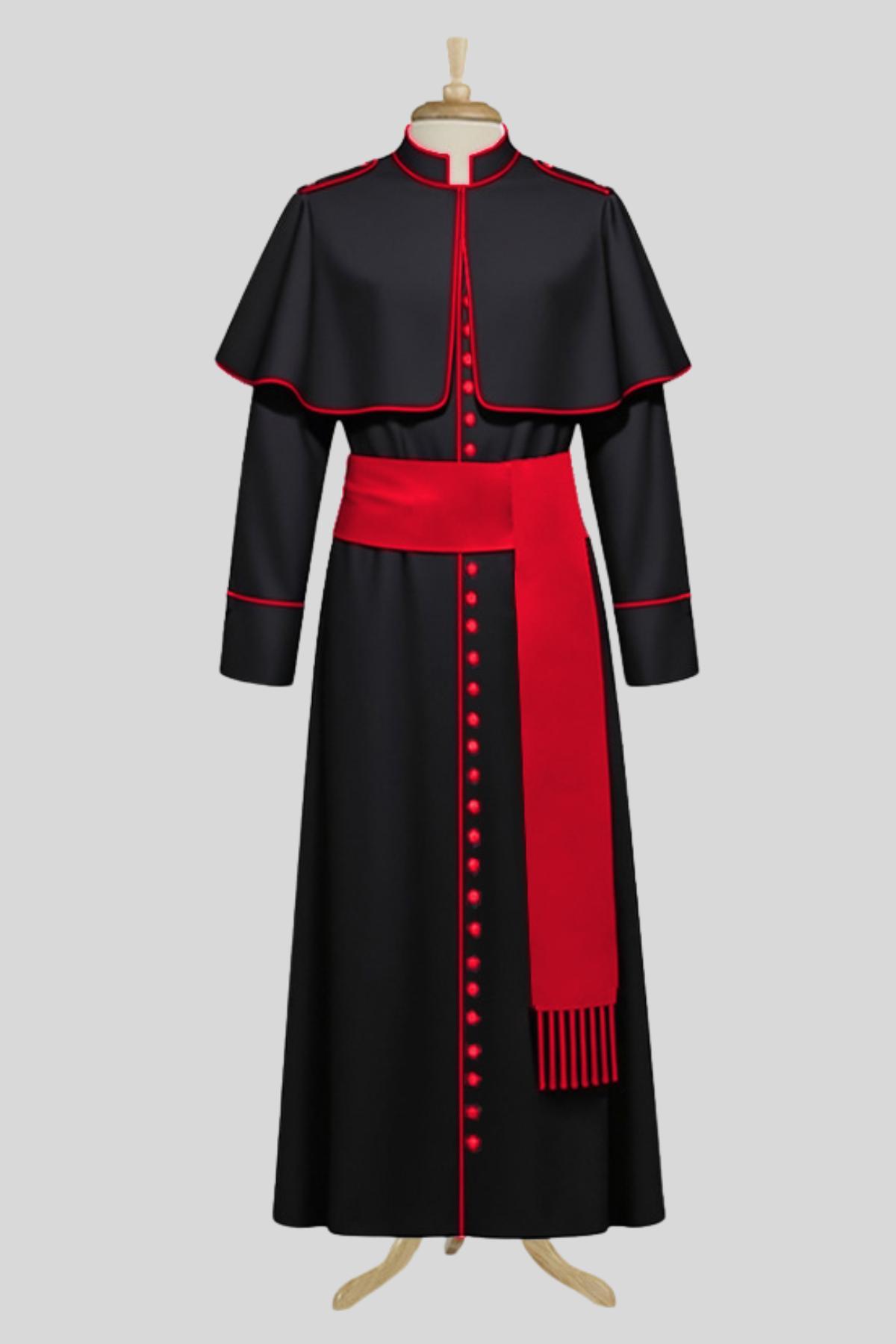
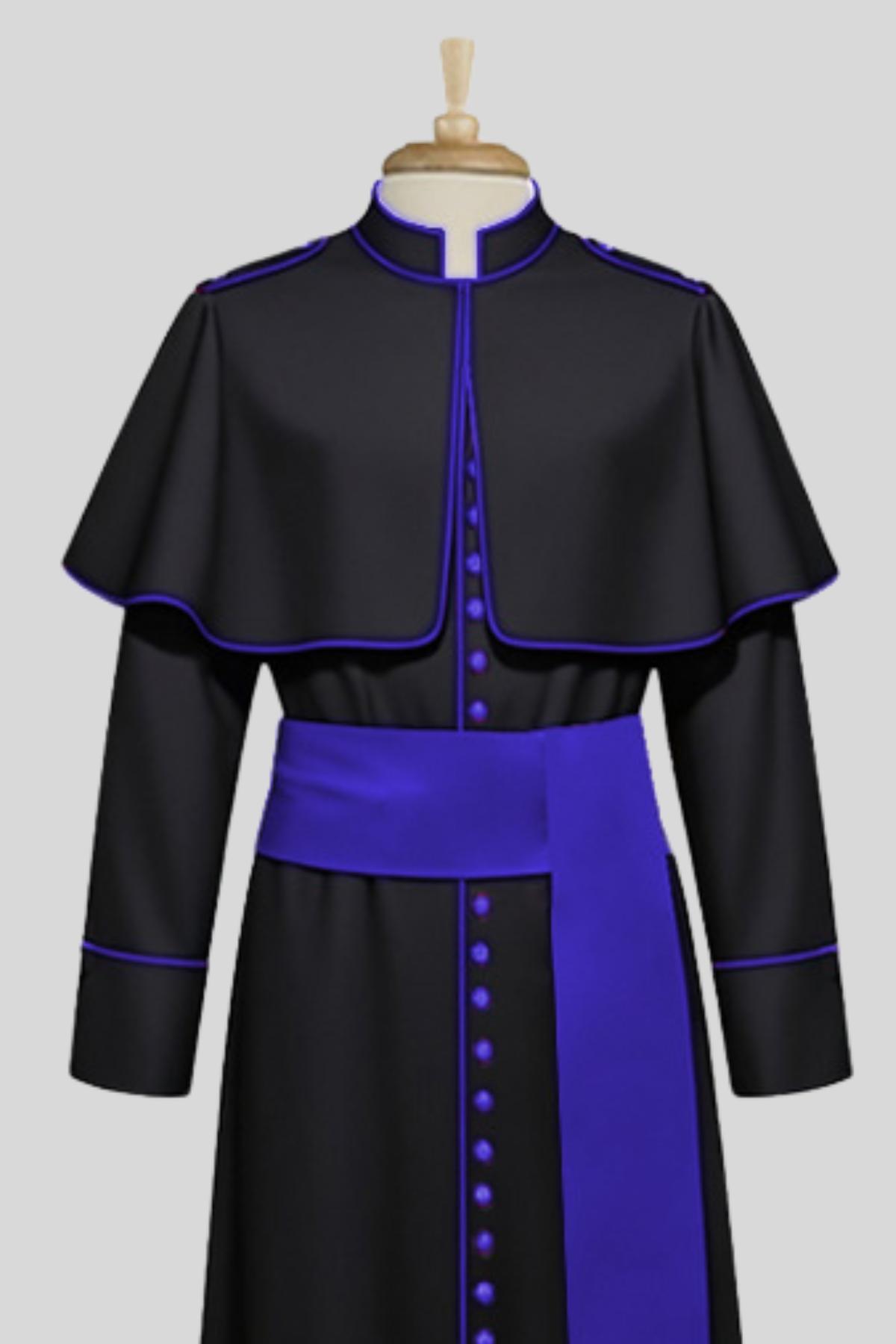
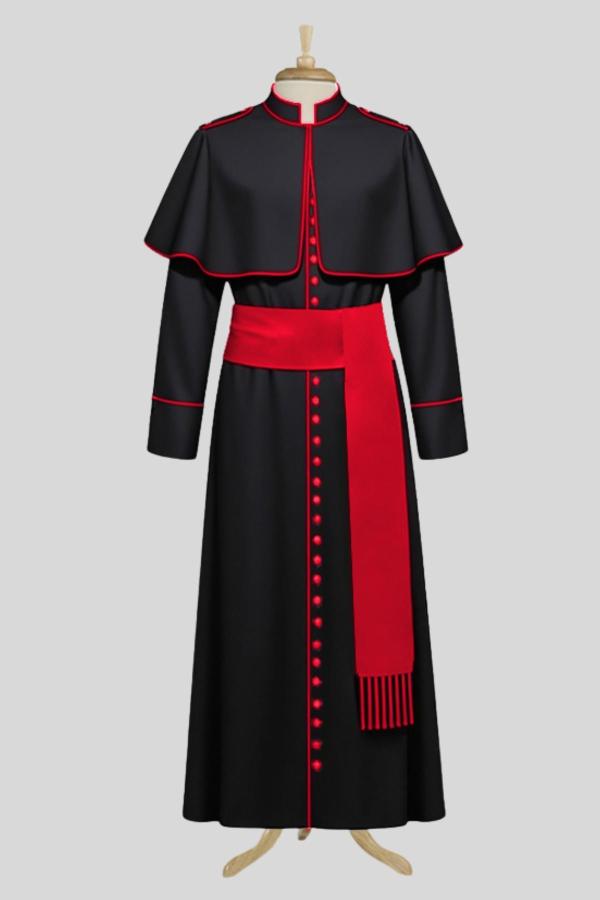
- Includes a shoulder cape with matching piping for a refined and formal appearance.
House Cassock for Bishop with Spiritual Authority
The House Cassock for Bishops is more than just clerical attire it’s a profound symbol of spiritual leadership, tradition, and ecclesiastical authority. Designed with both functionality and elegance in mind, this timeless garment represents centuries of Christian heritage and the elevated role of a bishop within the Church.
Distinctive Features of the Bishop’s House Cassock:
- Premium Fabric: Crafted from high-quality tropical fabric, known for its durability and breathability ideal for year-round comfort.
- Tailored Fit: Designed to be form-fitting and ankle-length, offering a dignified, elegant silhouette that reflects the bishop’s esteemed position.
- 33 Front Buttons: A significant detail often visible or hidden these buttons represent the 33 years of Jesus Christ’s earthly life.
- Long Sleeves: Traditional full-length sleeves may include cuffs, sometimes adorned with trim that matches the cassock’s accent color.
- Standing Roman Collar: A formal clerical collar enhances the overall appearance, giving it a classic, reverent look.
- Colored Piping and Trim: Often accented with red or purple trim around the edges, cuffs, and back—colors traditionally associated with episcopal rank.
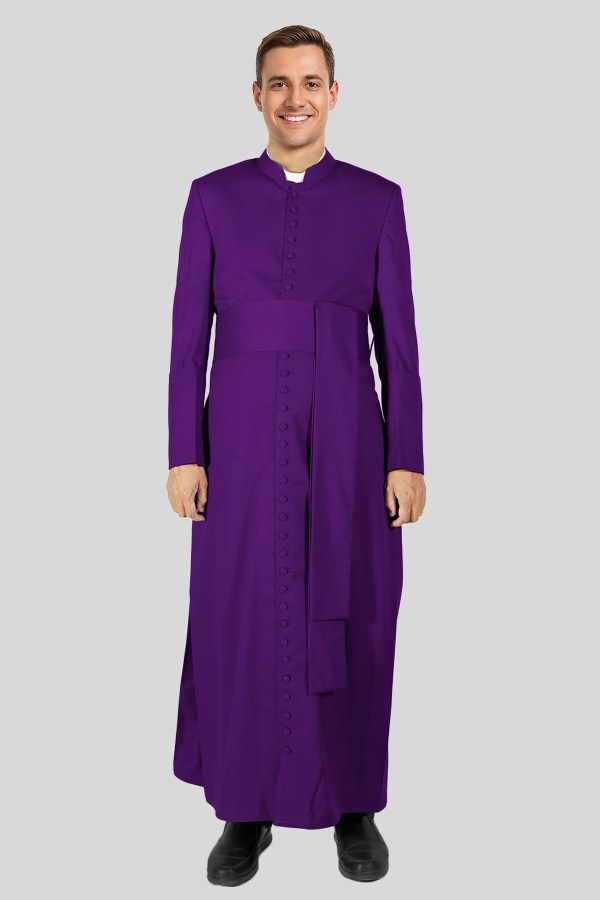
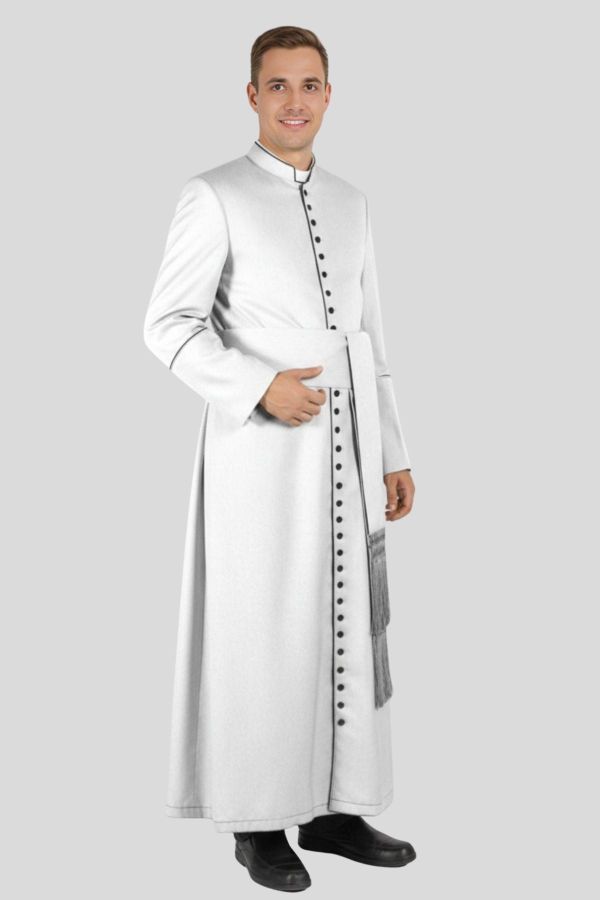
- Fascia (Sash): A wide sash tied around the waist in a matching trim color, adding refinement and visual balance.
- Back Pleats: Enhances ease of movement and comfort during long hours of service.
- Optional Shoulder Cape (Pellegrina): In some traditions, a matching cape is included for added warmth and ceremonial presence.
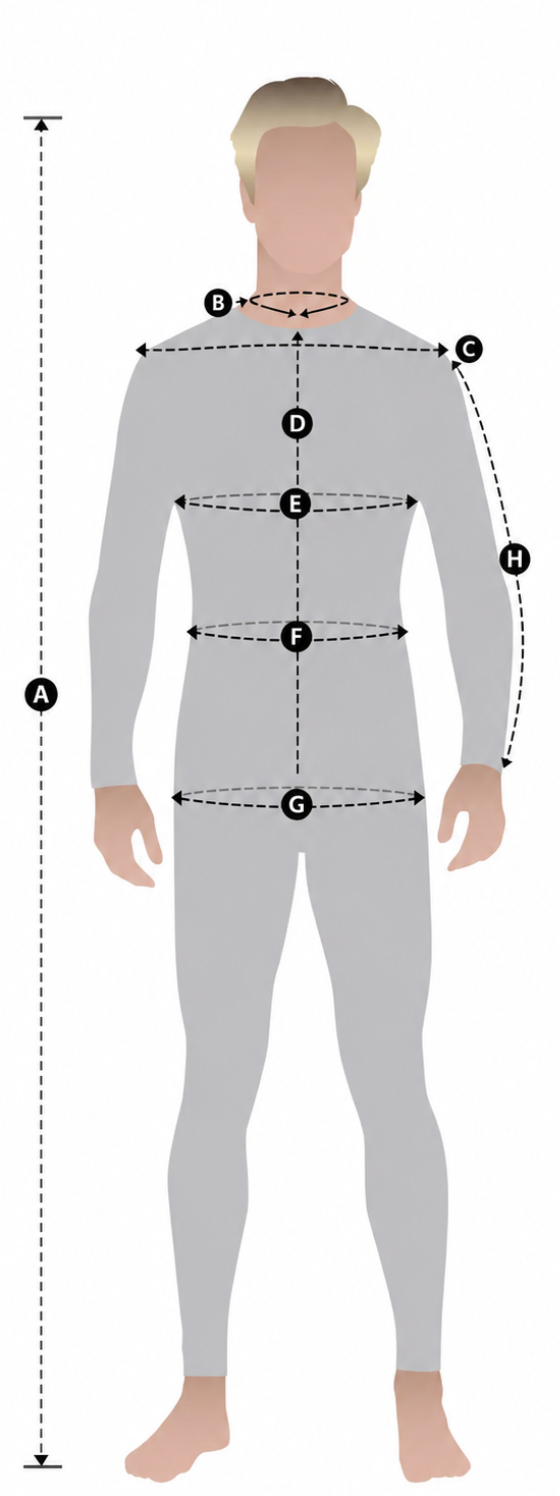
- Custom Fitting: Tailored to the bishop’s exact measurements to ensure the perfect fit and superior comfort.
The Bishop House Cassock is a distinguished garment that not only honors tradition but also enhances the bishop’s role in leading, serving, and representing the Church with grace and spiritual authority.
FREQUENTLY ASKED QUESTIONS
What makes a bishop cassock different from a priest's cassock?
A bishop cassock and a priest's cassock share the same basic long, ankle-length design, but traditional ecclesiastical dress distinguishes them through color and decorative details. In the Latin Catholic tradition, a bishop's cassock may be black with amaranth-colored piping, buttons, and trim, or purple for choir dress, while a priest's ordinary cassock is generally black. These distinctions reflect ecclesiastical rank and prescribed church dress.
Holy Clergy creates bishop cassocks with traditional styling, refined piping, detailed buttons, and a dignified finish for formal clergy attire.
What does a purple bishop cassock symbolize?
A purple bishop cassock is traditionally associated with the office and dignity of a bishop, particularly within the Latin Catholic tradition. Purple or violet serves as a distinctive episcopal color in formal ecclesiastical dress. The color helps visually identify the bishop's office and his role within the Church. However, the exact meaning and use of purple clergy attire can differ among Christian denominations and ecclesiastical traditions.
Holy Clergy offers traditionally inspired bishop cassocks featuring elegant purple tones and carefully finished details for a distinguished appearance.
What do the 33 buttons on a cassock represent?
The 33 buttons on a cassock are traditionally associated with the commonly cited 33 years of Christ's earthly life. Besides their symbolic association, buttons have a practical purpose because they fasten the long cassock along the front. However, the number 33 is a traditional design convention rather than a universal requirement for every cassock. Cassock construction can vary according to denomination, tradition, manufacturer, and individual design.
Holy Clergy incorporates classic button detailing into selected cassock styles, combining traditional symbolism with a polished and professional finish.
What does red piping on a bishop cassock mean?
Red piping on a bishop cassock can signify ecclesiastical rank or tradition, but its exact meaning depends on the church and style of vesture. In the Latin Catholic tradition, amaranth is the traditional trim color associated with bishops, while scarlet/red is associated particularly with cardinals. Therefore, a genuinely red-piped cassock should not automatically be interpreted as standard episcopal dress; church-specific conventions matter.
Holy Clergy pays close attention to piping, trim, buttons, and color combinations when creating formal bishop cassock designs.
What color fascia does a bishop wear?
In the Latin Catholic tradition, a bishop traditionally wears a purple fascia with the appropriate form of episcopal cassock. The fascia is a broad sash worn around the waist and forms part of formal ecclesiastical dress. Vatican ceremonial instructions specifically refer to prelates wearing a purple cassock and purple sash according to rank. Practices can vary among denominations and particular ecclesiastical traditions.
Holy Clergy offers bishop cassock styles designed to coordinate beautifully with a traditional purple fascia for a complete and dignified clergy ensemble.
 Premium Graceful Bishop's Cassock

This cassock exceeded my expectations. Comfortable, stylish, and dignified.


I love this cassock! It looks so elegant during church service and is easy to wear.

Wonderful cassock! The stitching is neat, and the overall finish is very professional.