
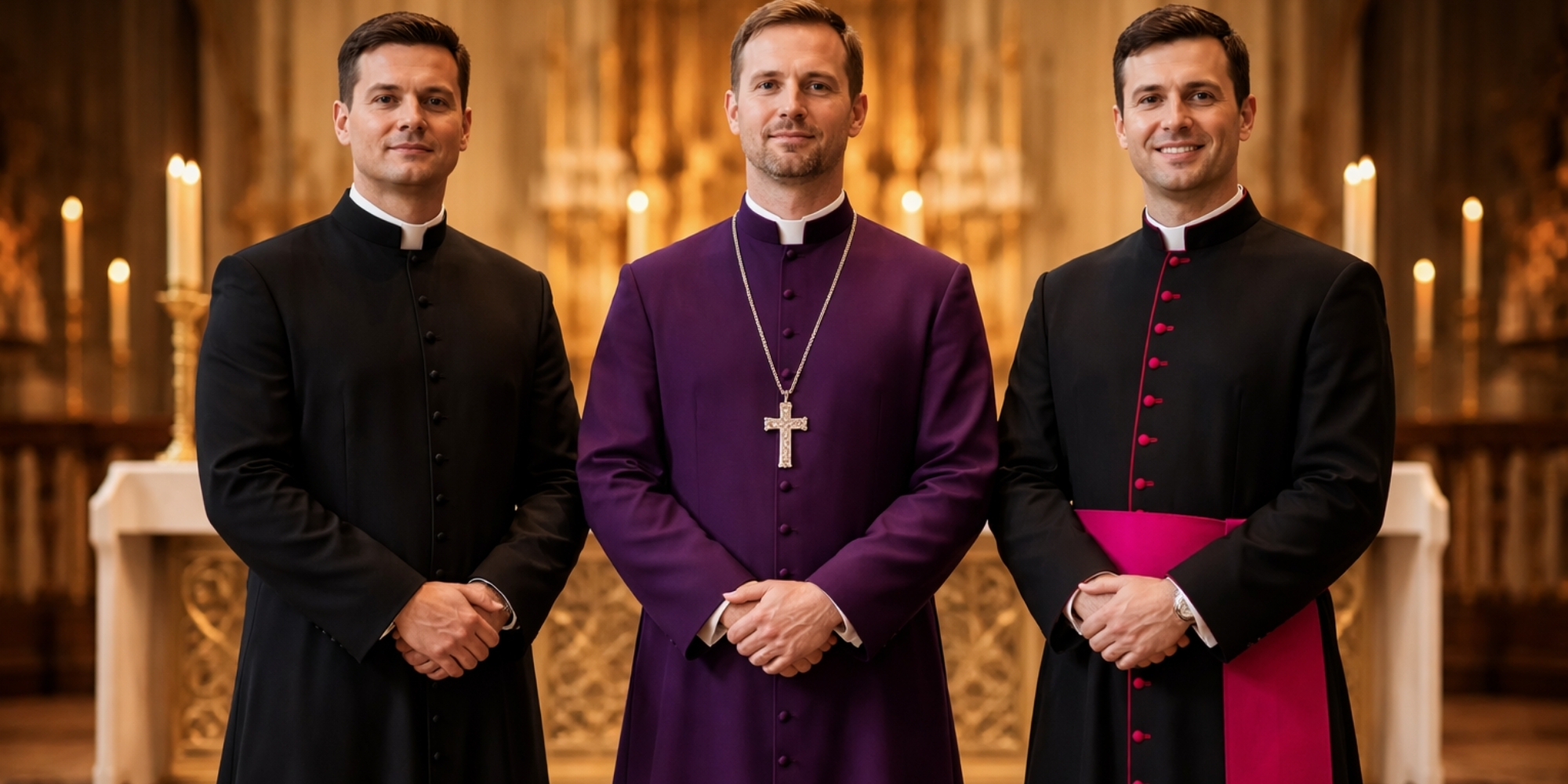
When you first see a cassock, it may appear as a simple, long robe worn by clergy. But behind its clean lines and structured form lies centuries of history, symbolism and tradition. The cassock is not merely a piece of clothing, it is a visual expression of faith, discipline, and spiritual authority.
For those exploring religious garments or researching clergy attire for men, understanding the origins of the cassock offers valuable insight into how tradition shapes modern ministry.
Let’s step back in time and explore the roots of one of the most recognizable garments in Christian ministry.
The Ancient Origins of the Cassock
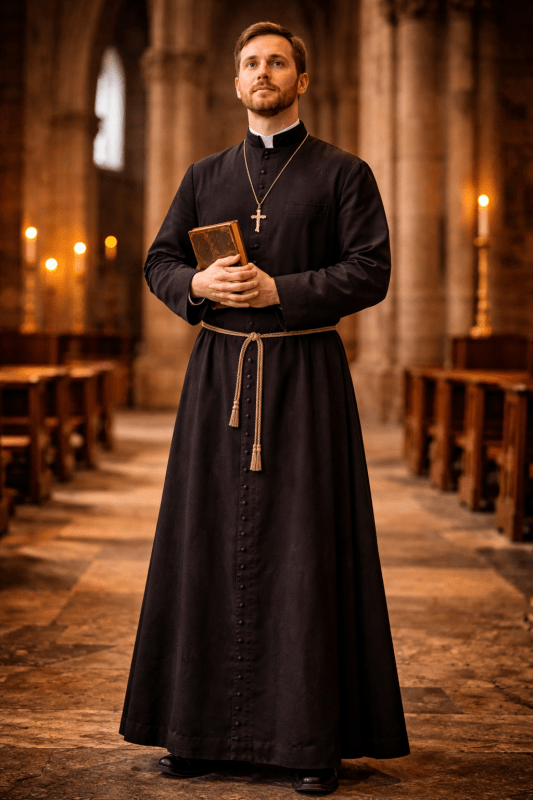
To see where the cassock comes from, we need to look back to the early days of Christianity, before official clergy clothing existed.
In the Roman Empire, everyday clothing for men typically consisted of tunics, long, loose-fitting garments that extended to the knees or ankles. People from all walks of life wore these tunics, everyone from philosophers and officials to religious leaders.
Early Christian leaders, including bishops and priests, did not initially distinguish themselves through clothing. Instead, they wore the same garments as the general population, reflecting humility and simplicity.
However, as Christianity grew and became more structured, especially after its legalization in the 4th century, clergy began to adopt more distinctive attire. The long tunic gradually evolved into a symbol of modesty and separation from secular life. Over time, this garment became more tailored, more formal, and more closely associated with religious authority.
The word “cassock” itself is believed to have roots in Middle French (“casaque”) and Italian (“casacca”), both referring to a long coat or robe. These linguistic origins highlight how the garment developed alongside European cultural influences.
What started as everyday clothing slowly transformed into a sacred uniform, marking the beginning of the cassock’s identity as a core element of clergy attire for men.
The Cassock in the Middle Ages: A Symbol of Order and Discipline
During the Middle Ages, the cassock began to take on a more defined role within the Church. As religious institutions became more organized, there was a growing need for visual distinction between clergy and laity.
This period saw the formalization of clerical dress codes. Church leaders recognized that attire could communicate authority, responsibility, and devotion. The cassock, with its long, flowing design, became a practical and symbolic choice.
By the 12th and 13th centuries, clergy were often required to wear garments that reflected modesty and discipline. Bright colors, extravagant fabrics, and fashionable styles were discouraged. Instead, the cassock was designed to be simple, dark, and uniform, emphasizing humility and spiritual focus.
The structure of the cassock also began to standardize during this time. Features such as:
- A long, ankle-length design
- Buttoned front (often with many small buttons)
- Close-fitting sleeves
These elements contributed to its recognizable form. The number of buttons, in some traditions, even carried symbolic meaning, such as representing religious vows or theological concepts.
In medieval Europe, clothing was a powerful indicator of social status and role. By wearing the cassock, clergy visually separated themselves from secular society, reinforcing their commitment to a higher calling.
Renaissance to Early Modern Period: Refinement and Variation
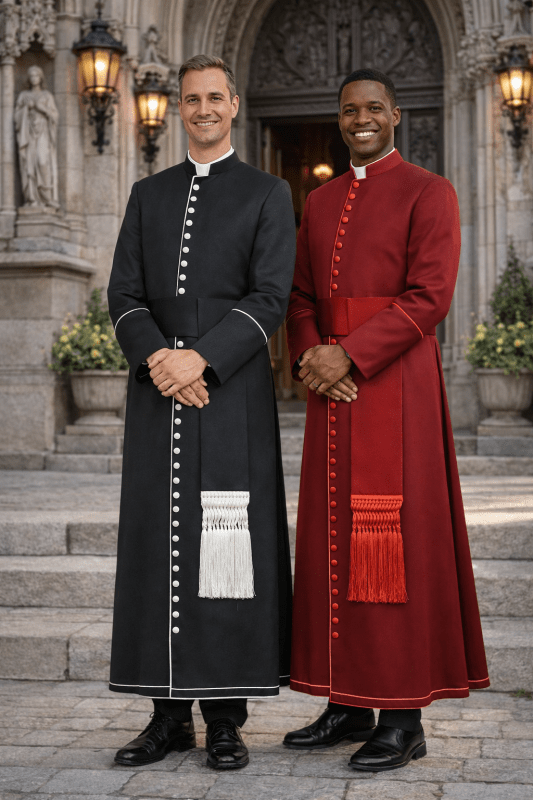
As Europe transitioned into the Renaissance and early modern period, the cassock continued to evolve. While its core structure remained consistent, variations began to emerge across different Christian denominations and regions.
In the Roman Catholic Church, the cassock became more formalized, with specific colors assigned based on rank. For example:
- Black for priest
- Purple for bishops
- Red for cardinals
These distinctions added another layer of meaning to the garment, transforming it into a visual hierarchy within the Church.
Meanwhile, in Anglican and Protestant traditions, the cassock was also adopted but often paired with additional garments such as surplices or preaching gowns. These combinations allowed for both tradition and flexibility, adapting the cassock to different styles of worship and ministry.
Fabric choices also improved during this time. While earlier cassocks were made from simple wool, later versions incorporated finer materials, offering better comfort and durability. Tailoring techniques advanced, resulting in a more polished and professional appearance.
This period marked a turning point where the cassock became not only a symbol of faith but also an expression of identity within various branches of Christianity. It solidified its place as a foundational element of clergy attire for men across the Western world.
The Symbolism Behind the Cassock
Beyond its historical development, the cassock carries deep symbolic meaning that continues to resonate with clergy today.
At its core, the cassock represents:
1. Commitment and Calling
Wearing a cassock signifies dedication to ministry. It serves as a daily reminder of one’s spiritual responsibilities and vocation.
2. Humility and Simplicity
The design of the cassock, modest, structured, and often dark, reflects a life focused on service rather than personal display.
3. Separation from the Secular World
By adopting distinct clothing, clergy visually demonstrate their role as spiritual leaders set apart for religious duties.
4. Continuity of Tradition
The cassock connects modern clergy to centuries of history, reinforcing a sense of belonging to a long-standing faith community.
Interestingly, even small details, such as the number of buttons or the style of the collar, can hold symbolic significance depending on the tradition.
For many ministers, the cassock is not just worn, it is experienced. It shapes posture, movement, and even mindset, influencing how one approaches worship and leadership.
The Cassock in Modern Times: Relevance and Adaptation
In today’s world, where fashion trends change rapidly, the cassock remains remarkably consistent. However, it has also adapted to meet the needs of modern clergy.
Contemporary cassocks are designed with comfort and practicality in mind. Lightweight fabrics, breathable materials, and improved tailoring make them suitable for long services and varied climates. Some versions even include hidden pockets or adjustable features for convenience.
Despite these updates, the essence of the cassock has not changed. It continues to serve as a visible sign of faith and leadership.
In many churches, especially those with traditional liturgical practices, the cassock is still worn regularly. In others, it may be reserved for special occasions such as:
- Formal worship services
- Ceremonies and sacraments
- Religious events and celebrations
The choice to wear a cassock often reflects a balance between tradition and personal or denominational preference.
For those exploring clergy attire for men today, the cassock remains a timeless option, combining heritage with functionality.
Cultural and Global Influence of the Cassock
While the cassock originated in Europe, its influence has spread worldwide. Today, it is worn by clergy across diverse cultures and continents.
In different regions, local traditions and climates have influenced how cassocks are designed and worn. For example:
- In warmer climates, lighter fabrics and shorter variations may be used
- In colder regions, heavier materials provide warmth and durability
Despite these variations, the core identity of the cassock remains intact. It continues to symbolize unity within the global Christian community.
This adaptability is one of the reasons the cassock has endured for centuries. It evolves without losing its essence, bridging tradition and modernity.
Choosing the Right Cassock Today
For modern clergy, selecting a cassock involves more than just tradition, it’s about comfort, functionality, and personal expression within the boundaries of faith.
Key factors to consider include:
Fit and Tailoring
A well-fitted cassock enhances both appearance and comfort. It should allow for ease of movement while maintaining a structured look.
Fabric
Choose breathable materials for warmer climates and heavier fabrics for colder environments.
Style and Design
Different traditions may prefer specific styles, such as Roman or Anglican cassocks. Understanding these distinctions helps in making the right choice.
Purpose
Consider when and where the cassock will be worn, daily ministry, special services, or ceremonial occasions.
By thoughtfully selecting a cassock, clergy can honor tradition while meeting the practical demands of modern ministry.
Frequently Asked Questions (FAQs)
What is the meaning of cassock?
A cassock is a long, close-fitting garment traditionally worn by Christian clergy as part of their official dress. The term originates from the French word casaque and Italian casacca, meaning a long coat or robe. In a religious context, the cassock represents humility, discipline, and dedication to spiritual service. Today, it is recognized as a foundational element of clergy attire for men, symbolizing both identity and tradition within the Church.
Who wears the cassock?
The cassock is primarily worn by ordained clergy, including priests, bishops, and sometimes deacons, depending on the denomination. It may also be worn by seminarians, altar servers, and choir members in certain traditions. While most commonly associated with the Roman Catholic, Anglican, and Orthodox churches, its use varies based on church customs and liturgical practices. In modern ministry, it remains a key part of formal clergy attire for men, especially during services and ceremonies.
Why is the cassock black?
The cassock is traditionally black because the color symbolizes humility, simplicity, and detachment from worldly distractions. Black reflects a commitment to a life of service rather than personal display or status. In many Christian traditions, it also represents spiritual authority and solemnity. However, color can vary by rank, bishops may wear purple, and cardinals red,indicating their position within the Church hierarchy.
Why are there 33 buttons on a cassock?
In many traditional designs, a cassock features 33 buttons to symbolize the 33 years of Jesus Christ’s life on earth. This detail is not universal but is widely recognized in Roman-style cassocks. The buttons serve both a practical and symbolic purpose, reminding the wearer of Christ’s life, sacrifice, and mission. This subtle symbolism adds depth to the garment, reinforcing its spiritual significance beyond simple clothing.
What is the difference between a surplice and a cassock?
A cassock is a long, fitted garment worn as a base layer of clergy attire, while a surplice is a loose, white, wide-sleeved garment worn over the cassock during services. The cassock is typically dark and represents discipline and order, whereas the surplice symbolizes purity and is used in liturgical settings. Together, they form a traditional combination in many churches, especially in Anglican and Catholic worship.
What is the difference between cassock and sutana?
There is no significant difference between a cassock and a sutana, they refer to the same garment. “Sutana” is simply another term used in certain regions or traditions, particularly in Eastern Europe and parts of the Orthodox Church. Both describe the long, close-fitting robe worn by clergy. The variation in terminology is cultural rather than functional.
Why do some priests wear cassocks and others don’t?
The use of a cassock depends on denomination, church tradition, and personal or pastoral preference. In more traditional or liturgical churches, priests often wear cassocks regularly as part of formal clergy attire for men. In other settings, especially modern or non-liturgical churches, priests may opt for simpler clothing, such as clerical shirts or suits, to connect more easily with their congregation. The decision reflects a balance between tradition, practicality, and ministry style.
Conclusion:
So, where does the cassock come from? Its origins trace back to the everyday clothing of ancient Rome, but its journey through history has transformed it into something far more meaningful.
From a simple tunic to a symbol of faith, discipline, and identity, the cassock has stood the test of time. It reflects the evolution of the Church, the diversity of Christian traditions, and the enduring importance of visual expression in spiritual life.
Today, as part of clergy attire for men, the cassock continues to inspire respect, convey authority, and connect the present with the past.







Add comment
You must be logged in to post a comment.