
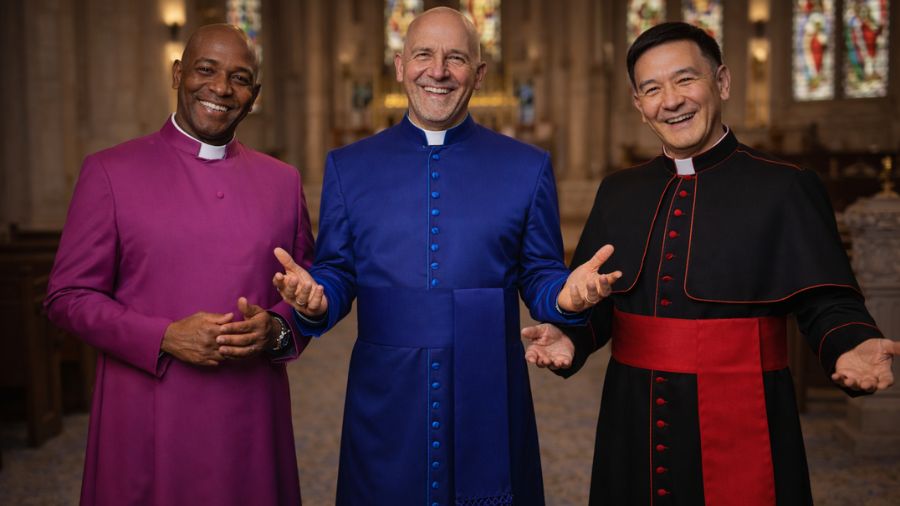
From ancient Roman streets to modern churches, the cassock has remained one of the most recognizable symbols of Christian clergy. Whether seen during daily ministry or formal religious ceremonies, this long, flowing garment represents more than just tradition, it reflects identity, discipline, and devotion.
But what exactly is a cassock in the Catholic Church? Why do priests wear it, and what does it symbolize in today’s world?
In this detailed guide, we’ll explore the history, meaning, types, and modern use of the cassock, along with its role in a traditional mens priest outfit.
What Is a Cassock?

A cassock is a long, close-fitting garment worn by Catholic clergy, typically reaching down to the ankles. It is one of the most traditional forms of clergy outfits and is often associated with priests, bishops and other church officials.
The cassock is worn with:
- A white clerical collar
- A cincture (belt or rope around the waist)
- Sometimes a skullcap (zucchetto)
Today, it remains an essential part of a formal mens priest outfit, especially during liturgical services and official duties.
History of the Cassock
The story of the cassock begins in ancient Rome, where long tunics were worn by men of all social classes. These garments were practical, modest, and suitable for everyday life.
As Christianity spread across the Roman Empire, early clergy adopted similar styles of dress. By the 4th century, these tunics became associated with religious identity.
Over time, the garment evolved:
- It became longer and more structured
- It was reserved specifically for clergy
- It developed symbolic meaning within the Church
By the Middle Ages, the cassock had become a distinct and official garment, separating clergy from laypeople and reinforcing their spiritual role.
Why Do Priests Wear a Cassock?
The cassock is not just clothing, it carries deep spiritual and symbolic meaning.
1. Symbol of Devotion
Wearing a cassock reflects a priest’s dedication to God and the Church. It visually represents a life committed to service and faith.
2. Simplicity and Humility
The cassock is designed to be simple, often plain in style. This reflects the priest’s vow of humility and detachment from worldly fashion.
3. Identity and Recognition
In public, the cassock helps people easily identify clergy members. This visibility reinforces their role as spiritual leaders.
4. Unity Among Clergy
The uniform nature of the cassock promotes unity and equality among members of the Church hierarchy.
Types of Cassocks and Their Meanings
Cassocks come in different colors, each representing a specific rank or purpose within the Catholic Church.
Black Cassock
The most common type, worn by priests.
- Symbolizes humility, discipline, and simplicity
- Standard choice for daily wear
White Cassock
Worn by the Pope and sometimes in tropical regions.
- Represents purity and holiness
- Associated with the highest authority in the Church
Red Cassock
Worn by Cardinals.
- Symbolizes sacrifice and willingness to defend the faith
- Represents loyalty to the Church
Purple Cassock
Worn by bishops or during special church seasons like Advent and Lent.
- Symbolizes penance, reflection, and preparation
Cassock vs Other Clergy Vestments
Many people confuse the cassock with other religious garments. Here’s how it differs:
Cassock vs Alb
- Cassock: Everyday clergy garment (black, fitted)
- Alb: White robe worn during Mass, symbolizing purity
Cassock vs Chasuble
- Cassock: Base garment
- Chasuble: Outer vestment worn during Eucharistic celebrations
Cassock vs Dalmatic
- Cassock: Worn by priests
- Dalmatic: Worn by deacons during liturgy
Each piece plays a role in completing a traditional mens priest outfit.
How Is a Cassock Worn?
A cassock is typically worn over basic undergarments or sometimes over an alb, depending on the occasion.
Key elements include:
- Fully buttoned front (except the top button)
- Worn with a clerical collar
- Sometimes paired with a cincture for added symbolismThe cassock is worn with careful attention to detail and tradition.
Typical features include:
- Fully buttoned front (symbolizing discipline)
- Paired with a white clerical collar
- Sometimes worn with a cincture (rope belt)
- May include a zucchetto (skullcap) for higher-ranking clergy
Accessories like the zucchetto (skullcap) may also be worn depending on rank.
Cassock in Modern Times
Despite changes in fashion and church practices, the cassock remains relevant today.
Many priests still wear it:
- During Mass and liturgical services
- In formal church settings
- In traditional or conservative parishes
However, in some regions, clergy may opt for simpler attire like a clerical shirt and collar for daily activities.
Even so, the cassock continues to hold strong symbolic value and is still widely recognized as a key part of clergy identity.
Materials and Design
Traditionally, cassocks were made from wool, especially in colder regions. Today, they are available in various materials:
- Tropical fabric(traditional and durable)
- Cotton (lightweight and breathable)
- Polyester blends (modern and easy to maintain)
The design remains modest, focusing on function rather than fashion.
The Role of the Cassock in a Mens Priest Outfit
A traditional mens priest outfit is incomplete without the cassock. It serves as the foundation upon which other vestments are added.
Depending on the occasion, the cassock may be combined with:
- A stole
- A chasuble
- A surplice
This layered approach reflects both function and symbolism within Catholic worship.
Frequently Asked Questions (FAQs)
Is the cassock still worn today?
Yes, many Catholic clergy still wear the cassock, especially during religious services and formal occasions.
Why is the cassock usually black?
Black represents humility, discipline, and a life devoted to spiritual service rather than worldly pursuits.
Can anyone wear a cassock?
No, the cassock is traditionally reserved for ordained clergy members in the Church.
What is the purpose of a cassock?
The cassock serves as a symbol of religious commitment, clergy identity, and spiritual discipline.
Is a cassock part of a mens priest outfit?
Yes, the cassock is a central and traditional element of a formal mens priest outfit.
Conclusion
The cassock remains one of the most meaningful and enduring symbols of the Catholic clergy. From its origins in ancient Rome to its role in modern worship, it continues to represent faith, discipline, and tradition.
While styles and practices may evolve, the significance of the cassock has not faded. It still stands as a powerful reminder of a life dedicated to service, humility, and spiritual leadership.
For anyone exploring clergy attire or understanding the structure of a mens priest outfit, the cassock is an essential and timeless piece.





Add comment
You must be logged in to post a comment.