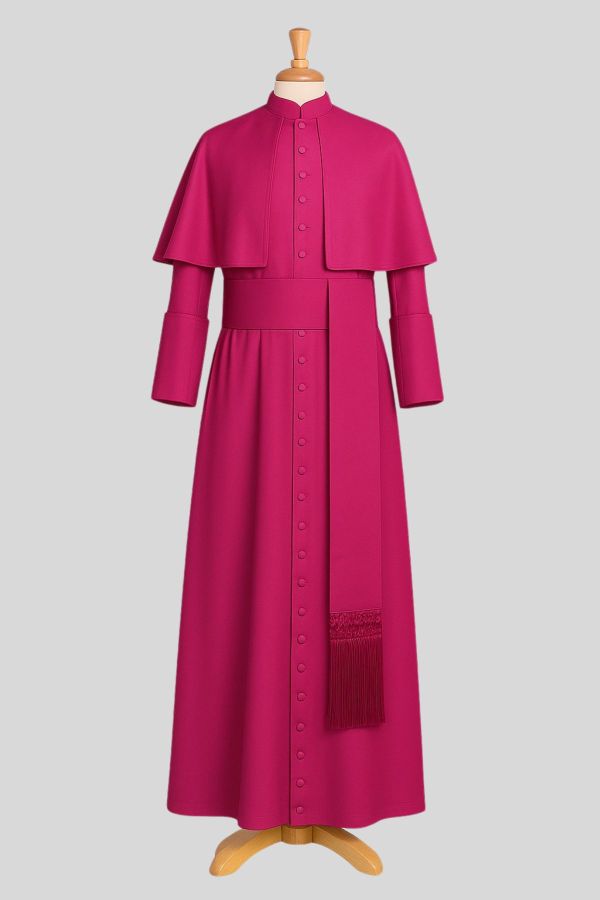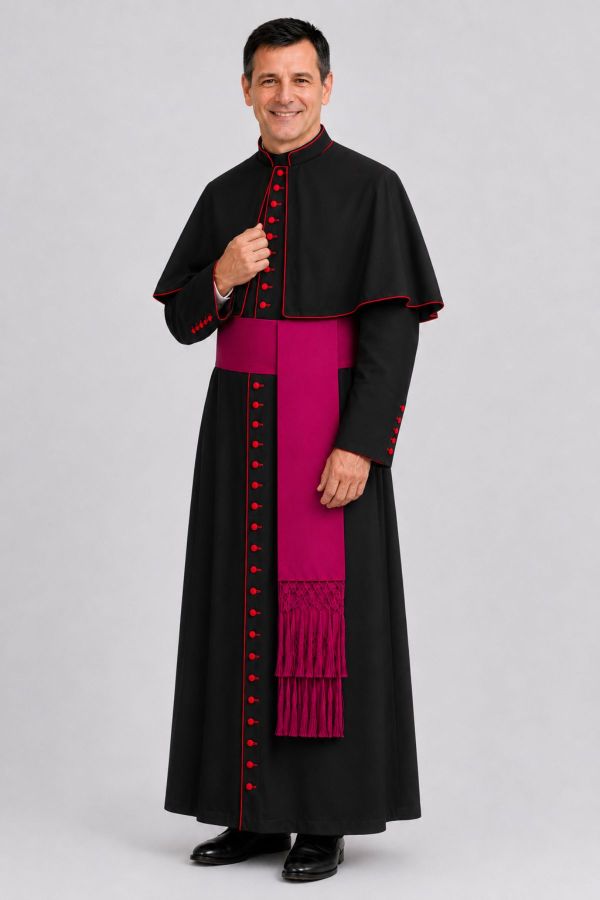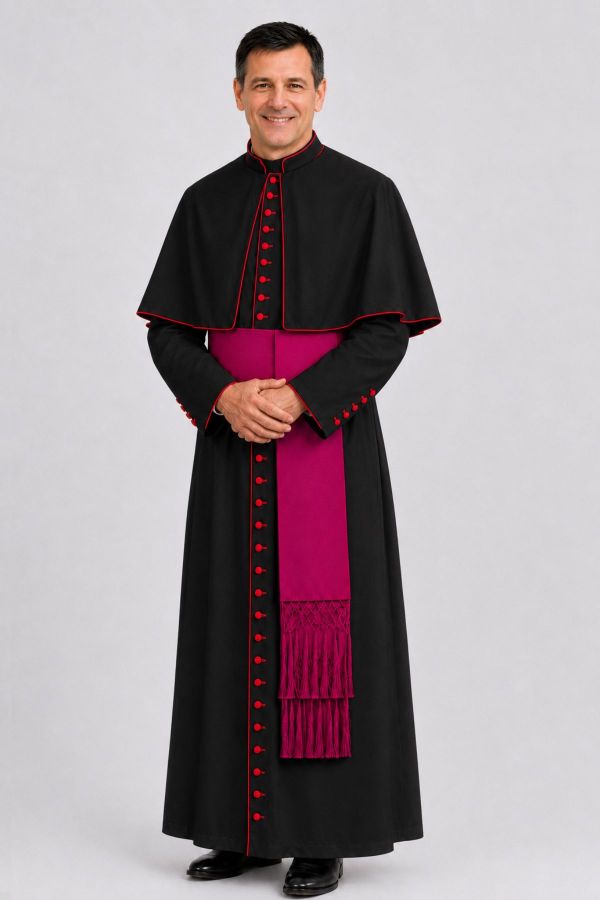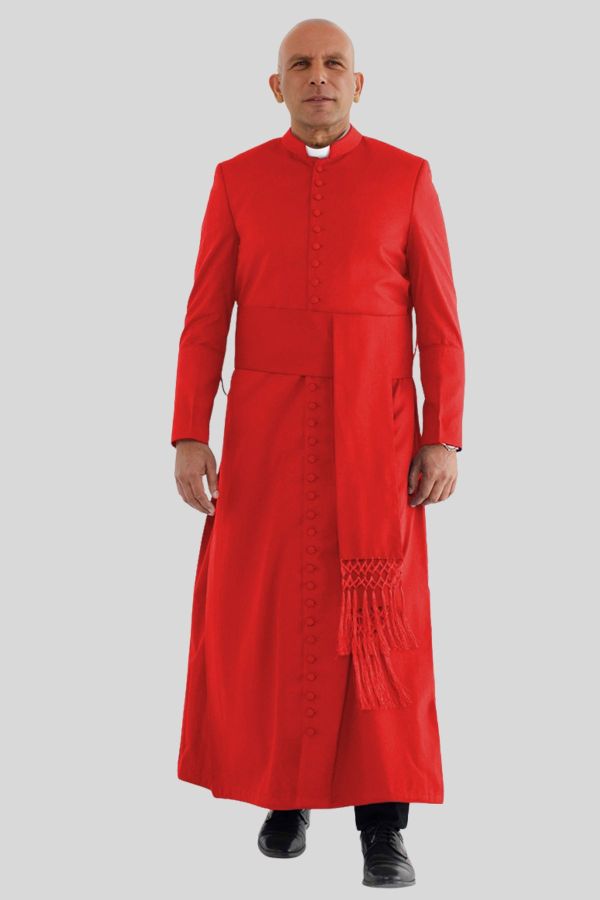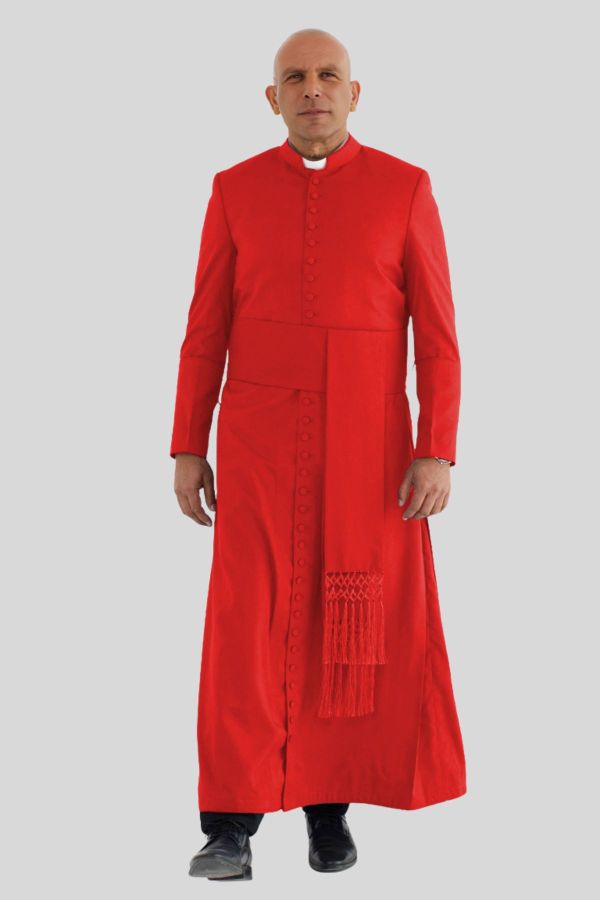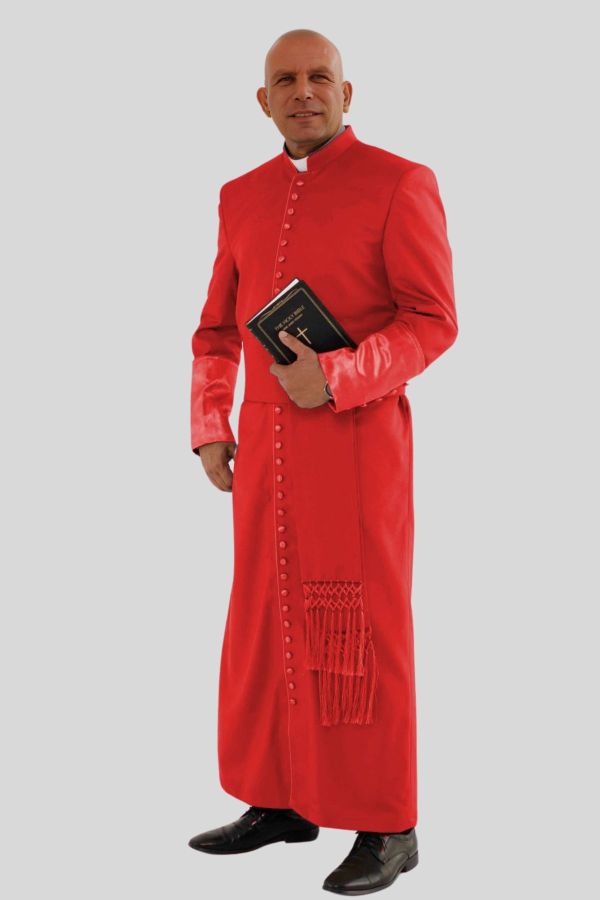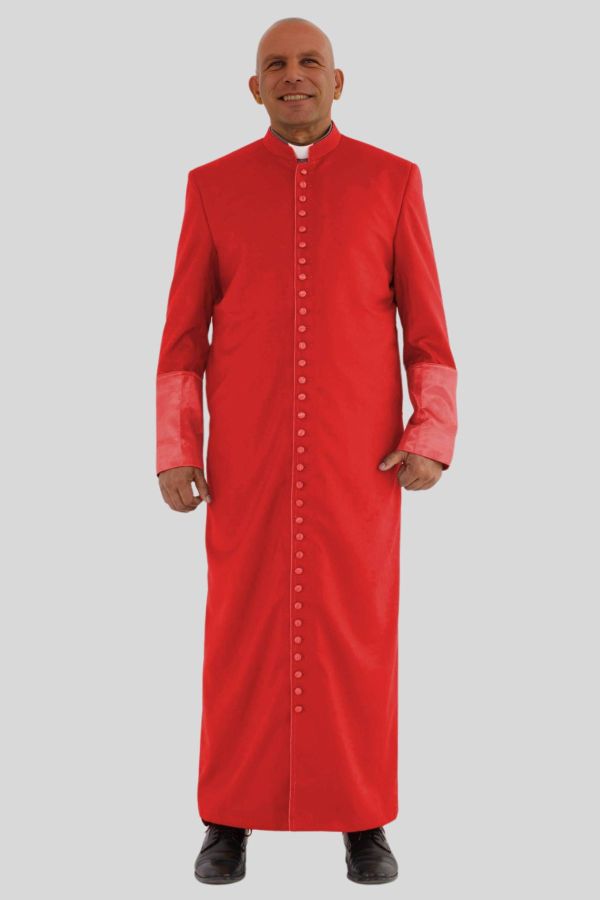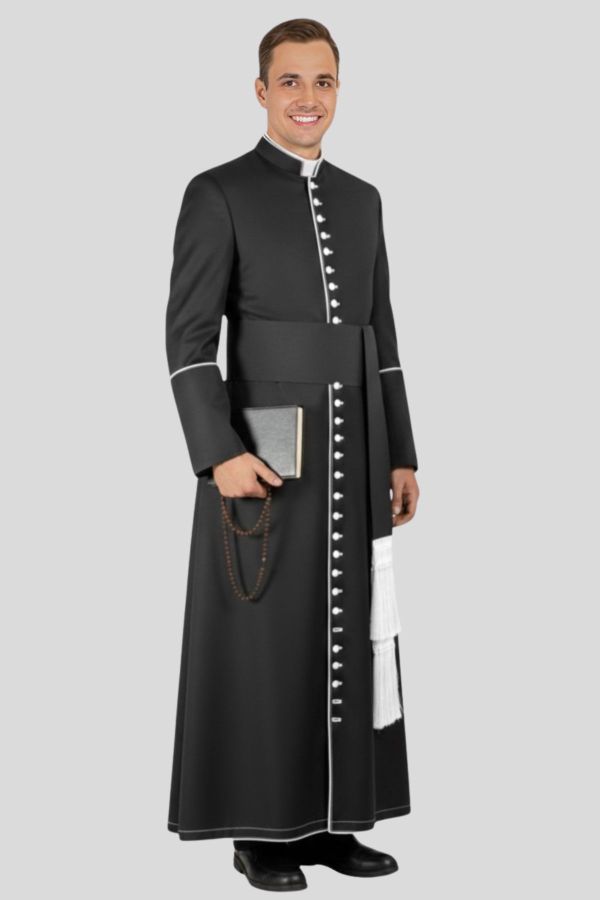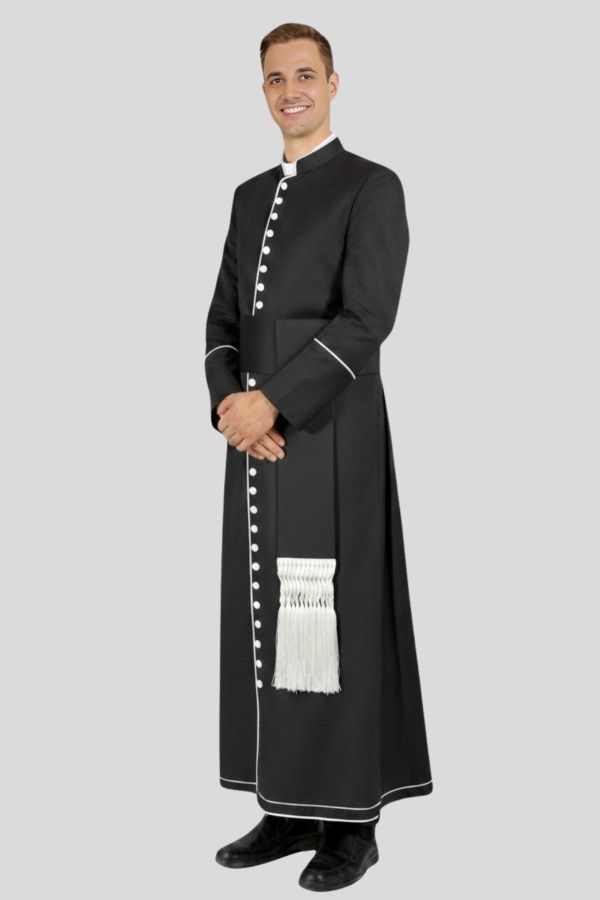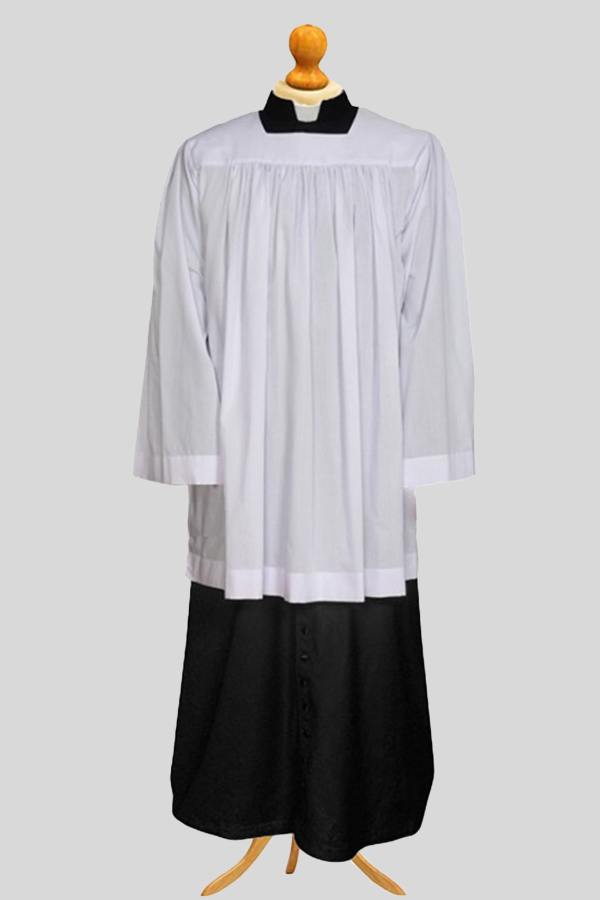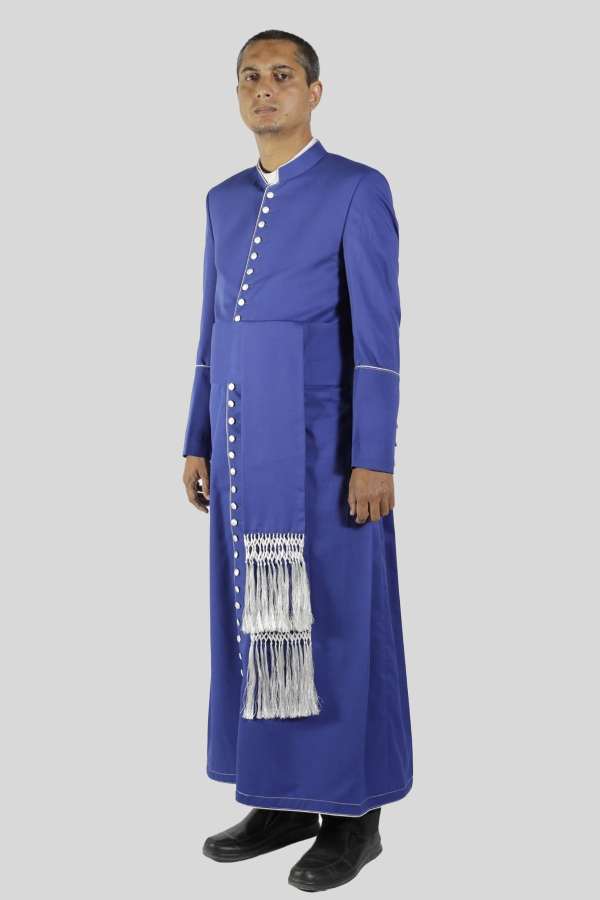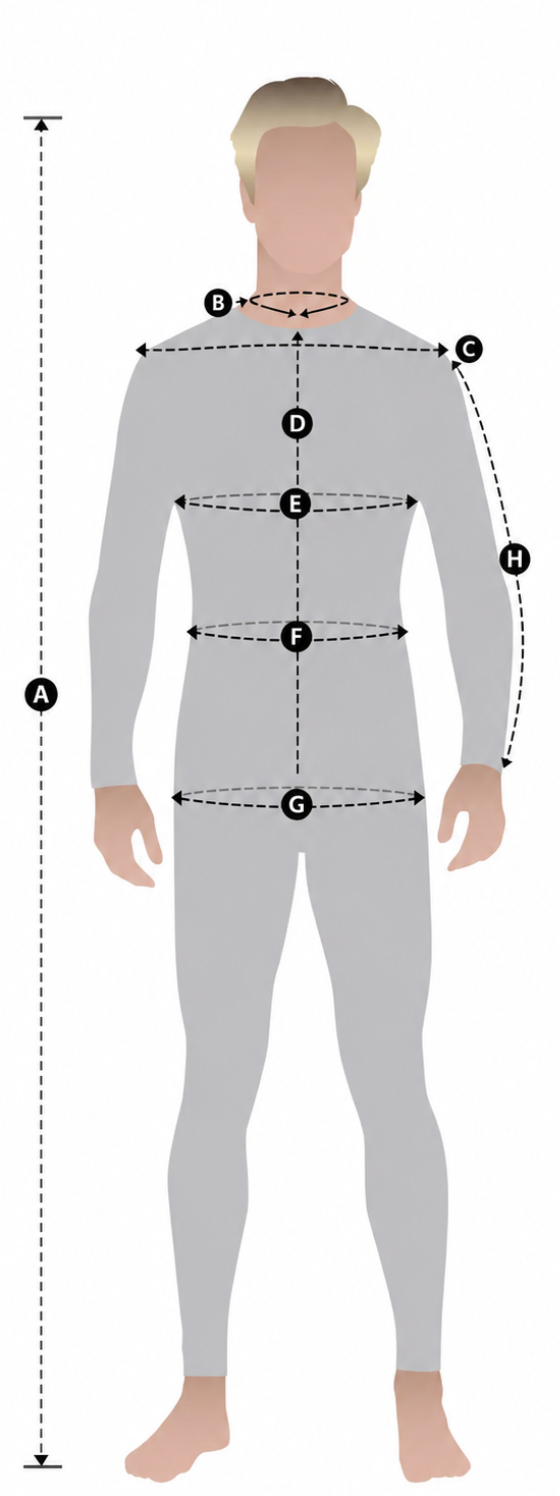
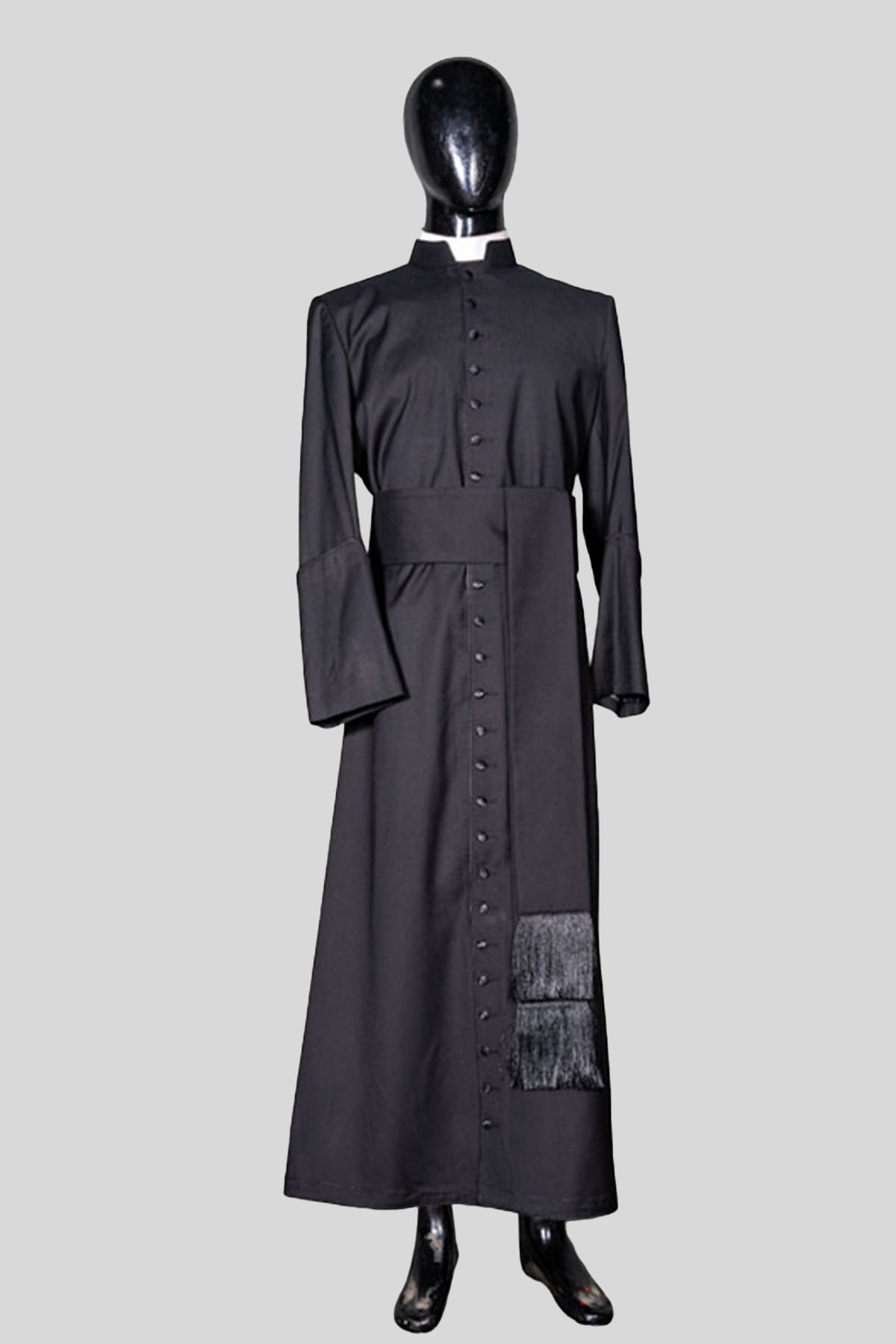
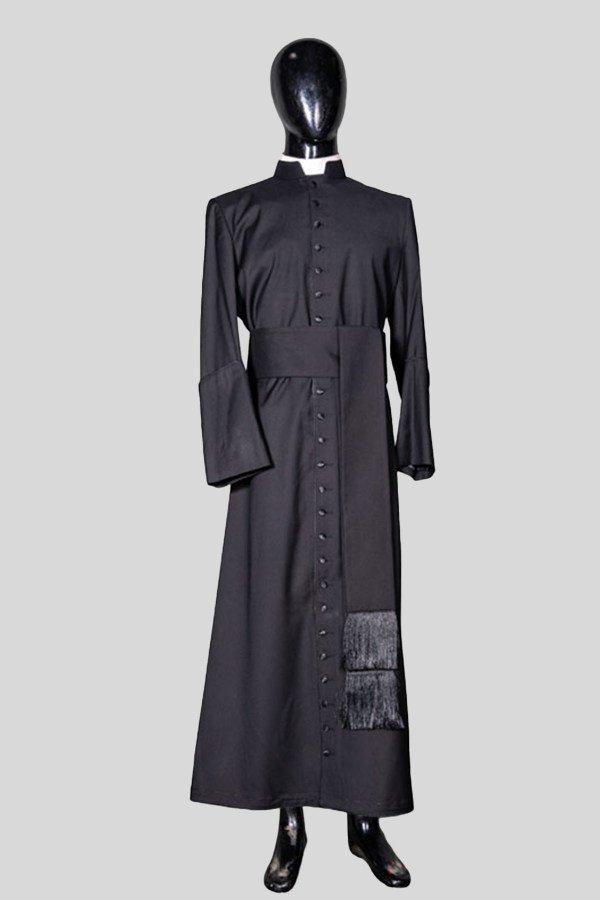
Superior Black Wool Priest Cassock Perfect for Formal Liturgical Services
Price range: $ 229.99 through $ 289.99
- Premium quality black wool used for production.
- Finished with matching black satin-covered 33 buttons.
- Three backplates are made on the back of cassock.
- The ends of the cincture have black fringes black.
- Finished with two inside breast pockets.
- Combination of two side opening pockets.
- Soft shoulder pads for ease.
NOTE: Cincture may be added.
The Black Holy Cassocks for Priest
The black cassocks, a timeless and iconic garment in the world of clerical attire, carries with it a rich tapestry of symbolism and historical significance. This ankle-length robe, often worn by clergy members, particularly in Catholic and Anglican traditions, serves as a visual representation of their commitment to religious service and humility.
Historical Roots
The origins of the black cassock can be traced back through centuries of ecclesiastical history. Its roots lie in the simple tunics and robes worn by early Christian monks and clergy. Over time, as religious practices evolved, so did the style of clerical garments. The black cassock emerged as a distinctive and practical choice, emphasizing the ideals of modesty and simplicity inherent in religious life.
Symbolism of Color
The color black, chosen for the cassock, holds profound symbolism within the context of clerical attire. Black is traditionally associated with mourning and penance, underscoring the clergy’s acknowledgment of human frailty and sin. In this context, the black cassock becomes a powerful reminder of the priest’s role as a mediator between the divine and the human, guiding their flock through both joy and sorrow.
Humility and Consecration
Beyond its color, the black cassock embodies the virtues of humility and consecration. The garment’s unadorned, flowing design serves as a visual expression of the priest’s commitment to a life of simplicity and selfless service. Wearing the cassock becomes an act of consecration, a daily reminder of the sacred vows and responsibilities shouldered by the clergy.
Practicality and Universality
In addition to its symbolic weight, the black robe offers practical benefits. Its design allows for ease of movement during religious ceremonies, a crucial consideration for clergy members engaged in various liturgical activities. Moreover, the simplicity of the black cassock transcends cultural and denominational boundaries, making it a universal symbol of clerical identity.
Modern Interpretations
While rooted in tradition, the black cassocks have seen subtle adaptations to fit the modern landscape. Some clergy members opt for tailored variations or choose fabrics that align with contemporary preferences, without compromising the fundamental symbolism of the garment. This blend of tradition and modernity reflects an ongoing dialogue between the sacred and the evolving aspects of religious life.
In conclusion, the black cassock stands as a venerable emblem in the vast panorama of clerical attire. Its historical journey, deeply embedded symbolism, and adaptability to modern sensibilities make it a garment that transcends time, echoing the enduring commitment of clergy members to their sacred calling. Whether worn in quiet contemplation, during solemn ceremonies, or as a daily expression of faith, the black cassock continues to be a cherished and iconic garment in the diverse spectrum of clerical vestments.
FREQUENTLY ASKED QUESTIONS
What is the difference between a priest cassock and a clergy robe?
A priest cassock is a traditional full-length clerical garment designed for ecclesiastical dress, while a clergy robe is a broader term that can describe various garments used for worship, preaching, ceremonies, or academic functions. Cassocks are generally close-fitting with a structured front and clerical collar. Clergy robes may be looser and feature decorative panels or preaching details. Holy Clergy offers cassocks specifically tailored for traditional clerical wear.
Can a priest wear a cassock outside the church?
Yes, a priest can wear a cassock outside the church when it is consistent with his ecclesiastical tradition, local norms, and the purpose of the activity. Cassocks have historically functioned as public clerical dress, helping identify clergy beyond the church building. Catholic norms specifically address suitable ecclesiastical attire for clerics. Holy Clergy provides priest cassocks designed for church ministry, pastoral duties, formal appearances, and appropriate public clergy use.
What color cassock does a Catholic priest wear?
For many Latin Catholic priests, black is the customary cassock color, although ecclesiastical dress can vary according to office, tradition, and local norms. Bishops commonly use violet or purple distinctions, while the Pope is traditionally associated with white. The exact color should not be treated as a universal rule for every Catholic cleric. Holy Clergy offers black, white, and other traditional cassock styles according to different clergy requirements.
Why are most Catholic priest cassocks black?
Most Catholic priest cassocks are black because black has long been associated with ordinary clerical dress in the Latin Catholic tradition. It provides a restrained, dignified appearance and distinguishes clerical attire from secular clothing. Black also serves as the customary color for many priests while other colors can identify particular ecclesiastical offices. Holy Clergy follows this traditional visual language in its priest cassock designs while offering different options where legitimate customs allow.
Can a Catholic priest wear a white cassock?
Yes, a Catholic priest may wear a white cassock in circumstances where his ecclesiastical office, religious community, legitimate tradition, or local norms permit it. White is particularly associated with the Pope, while black remains customary for many Latin Catholic priests. Therefore, white is not the ordinary cassock color for every Catholic priest. Holy Clergy offers white cassock designs for clergy whose traditions and circumstances appropriately call for distinctive white ecclesiastical attire.
 Superior Black Wool Priest Cassock Perfect for Formal Liturgical Services

 Verified owner
cassock is absolutely stunning. The wool fabric feels premium and looks very formal.

 Verified owner
The craftsmanship is excellent. You can tell it's designed for serious liturgical use.
 Verified owner
I wore this cassock for Easter service and it felt dignified, warm, and perfectly tailored.