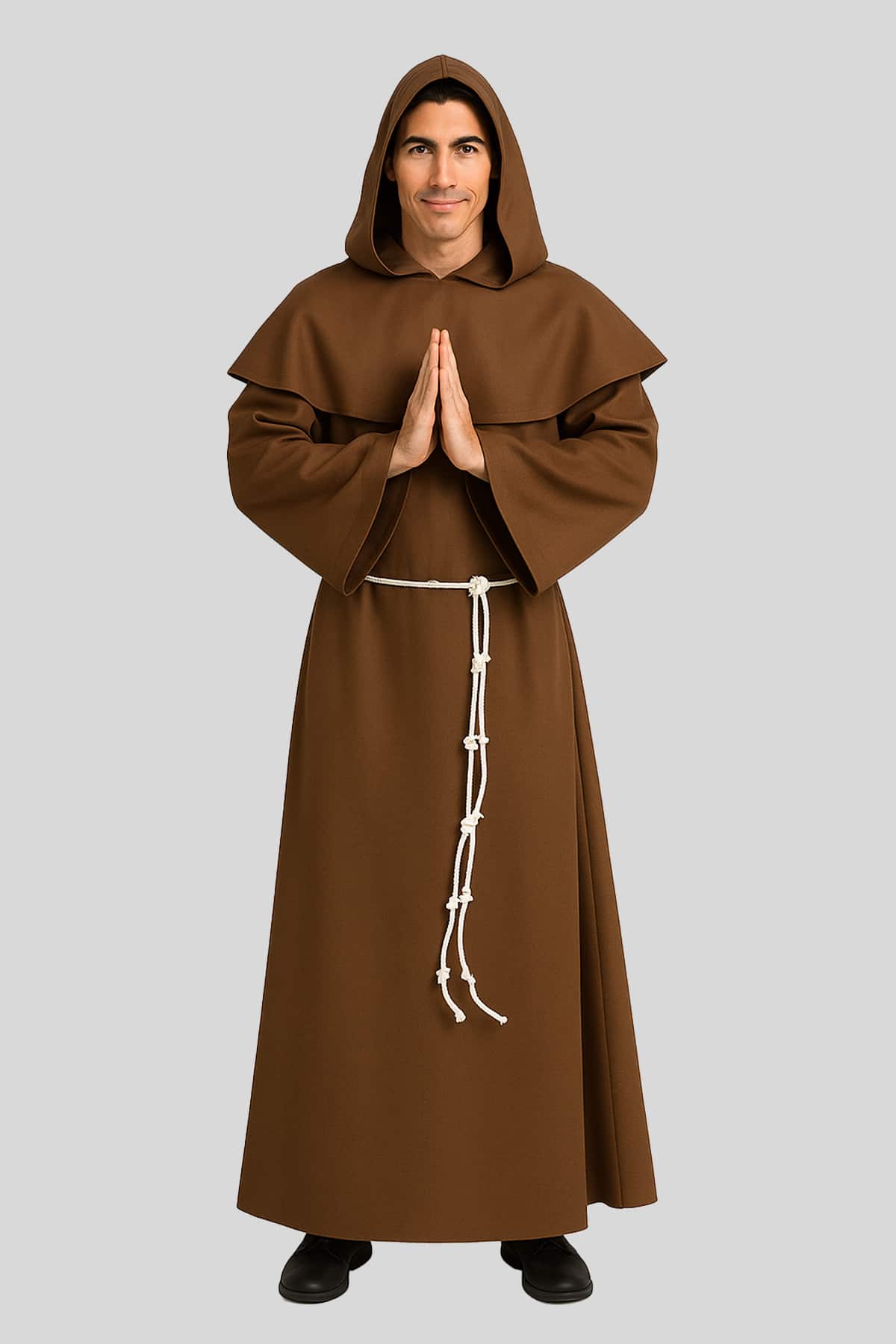
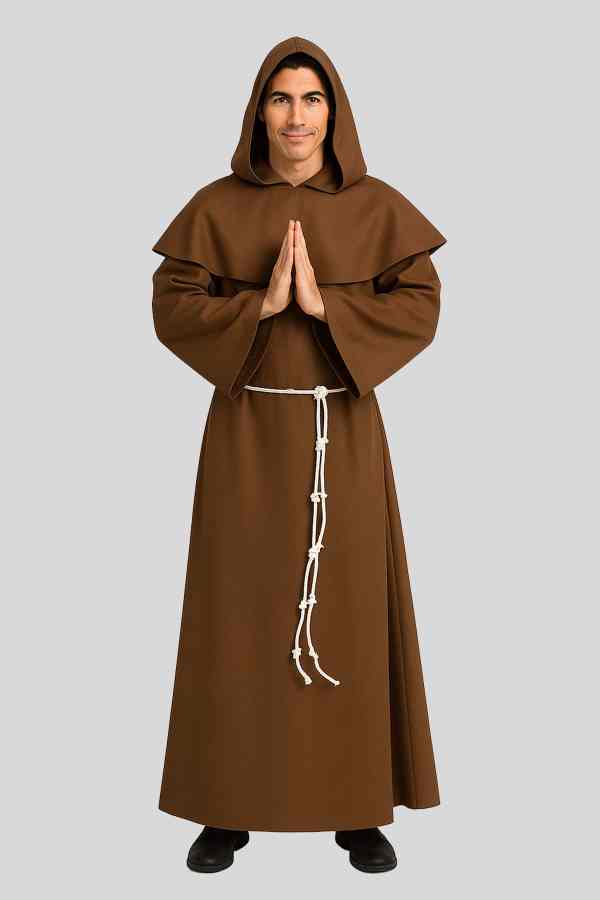
Medieval Monk Robe with Hood & Rope Belt Authentic Franciscan Style
Price range: $ 119.99 through $ 129.99
- Raw cotton is used for manufacturing Monk Robe.
- Perfect for Saint Francis, Renaissance fairs, or other medieval re-enactments.
- The robe gives authentic look for Medieval monks & Saint Francis.
- Based on the medieval robes of the order of St. Francis.
- The rope belt is designed for an authentic complete look.
- Great for Medieval and Renaissance Fairs.
- Robe has a removable hoodcowl.
- The hood has a long tail.
Walk in the footsteps of ancient monks and mystics with our Medieval Monk Robes the ultimate fusion of spiritual tradition, historical authenticity, and timeless design. Whether you’re portraying a humble Franciscan, solemn Benedictine, or noble Cistercian, these robes bring depth and dignity to every performance or practice.
Crafted from high-quality, breathable fabric, each robe is cut for comfort and modesty. The flowing, full-length design with wide bell sleeves allows for free movement while maintaining a commanding presence. A deeply draped hood (cowl) adds mystery and solemnity, perfect for cloistered roles, sacred ceremonies, or dramatic entrances.
Every robe comes complete with a rope cincture (belt), the ancient symbol of monastic vows simplicity, poverty, and chastity. Whether in earthy browns, grays, or blacks, these tones echo the original garb worn in monasteries and religious communities throughout medieval Europe.
Ideal for a wide range of occasions from Renaissance fairs and church productions to Halloween, cosplay events, and spiritual retreats our monk robes are versatile, durable, and steeped in meaning.
Features:
- Available in Franciscan, Benedictine, and other traditional styles
- Generous hood, rope belt, and full-length silhouette included
- Made from durable, easy-care, breathable fabric
- Perfect for LARP, cosplay, church plays, medieval reenactments
- Comes in multiple sizes for adults and teens
Why Choose Us?
We specialize in garments that connect history with soul. Our monk robes are crafted with reverence, ensuring both historical detail and long-lasting comfort. Wear it with pride for storytelling, ceremony, or self-expression.
FREQUENTLY ASKED QUESTIONS
What is a medieval monk robe?
A medieval monk robe was a religious garment worn by monks as part of their community’s established clothing and daily life. Medieval monastic clothing varied by religious order, region, period, and available materials. It commonly consisted of a long tunic or habit, sometimes accompanied by a hooded outer garment, scapular, belt, or cloak. The robe provided modesty and protection while expressing the monk’s religious vocation and community identity.
What did medieval monks wear?
Medieval monks typically wore a long tunic or habit, often combined with a scapular, hood, cowl, cloak, or other outer garment depending on their religious order. Their clothing was generally designed for modesty, simplicity, durability, and practical work. The exact style varied significantly between Benedictines, Franciscans, Dominicans, Cistercians, Augustinians, and other communities. Monastic dress also changed over time as materials, customs, and religious regulations developed.
Why did medieval monks wear robes?
Medieval monks wore robes as part of their religious discipline, community identity, and commitment to a simple way of life. Monastic clothing provided modest coverage, protection from weather, and practical garments for work and worship. The habit also distinguished members of a religious community from ordinary secular society. Its design and simplicity reflected the values, regulations, and spiritual traditions of the particular monastery or religious order.
What fabric was used for medieval monk robes?
Wool was one of the most common fabrics used for medieval monk robes, particularly in European monasteries because it was warm, durable, and widely available. Linen was also used, especially for lighter clothing worn beneath heavier outer garments. Fabric quality and color varied according to the monastery, region, period, and economic resources. Religious communities generally favored practical, modest materials that could withstand daily work, prayer, travel, and changing weather conditions.
Did medieval monks wear black robes?
Yes, some medieval monks wore black robes, most notably Benedictine monks, whose traditional habit became strongly associated with black. However, black was not worn by every medieval monk. Monastic clothing differed among religious orders, and the color could change according to historical period and local practice. The familiar black monk’s habit therefore represents particular traditions rather than a universal medieval standard for all monks throughout Europe.
 Medieval Monk Robe with Hood & Rope Belt Authentic Franciscan Style

 Verified owner
medieval monk robe is exactly what I was looking for. It feels authentic and well made.

Decent for casual costume use. Material isn’t the best and the hood doesn’t stay put, but it gets the job done.
 Verified owner
Not pefect, size xl, ordered large