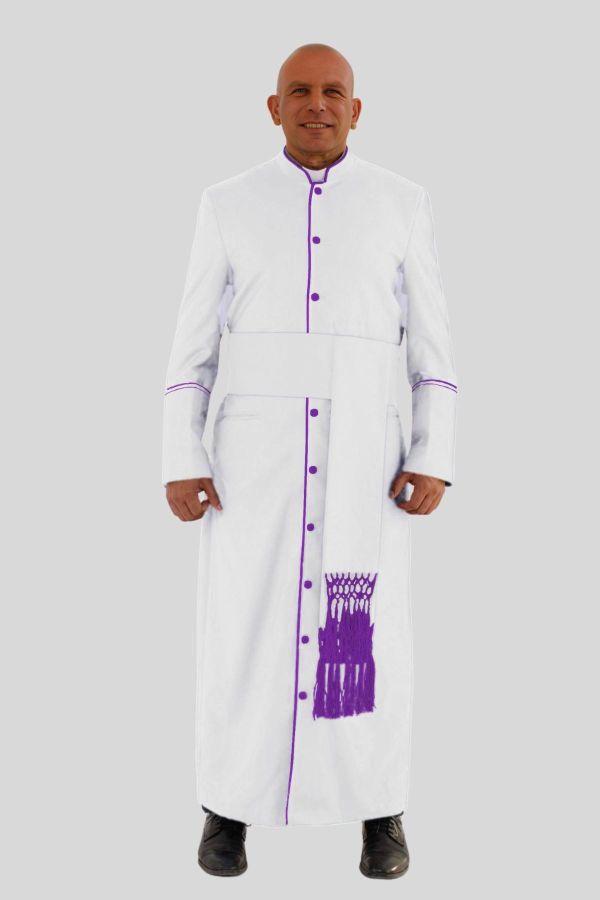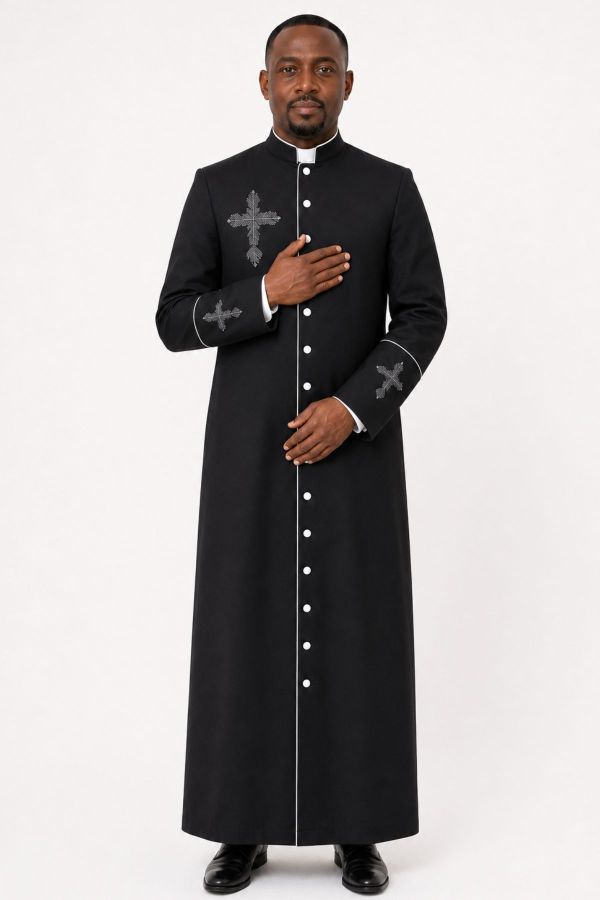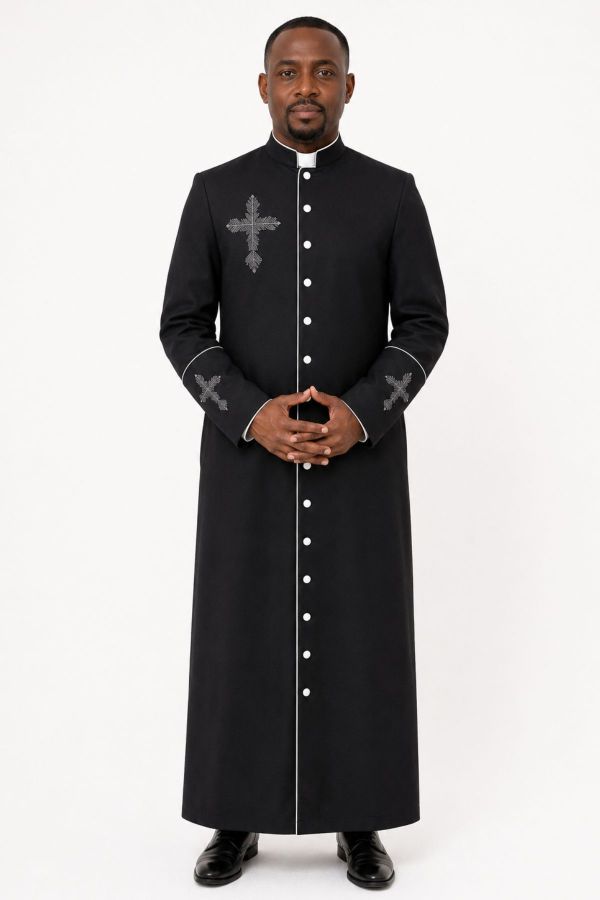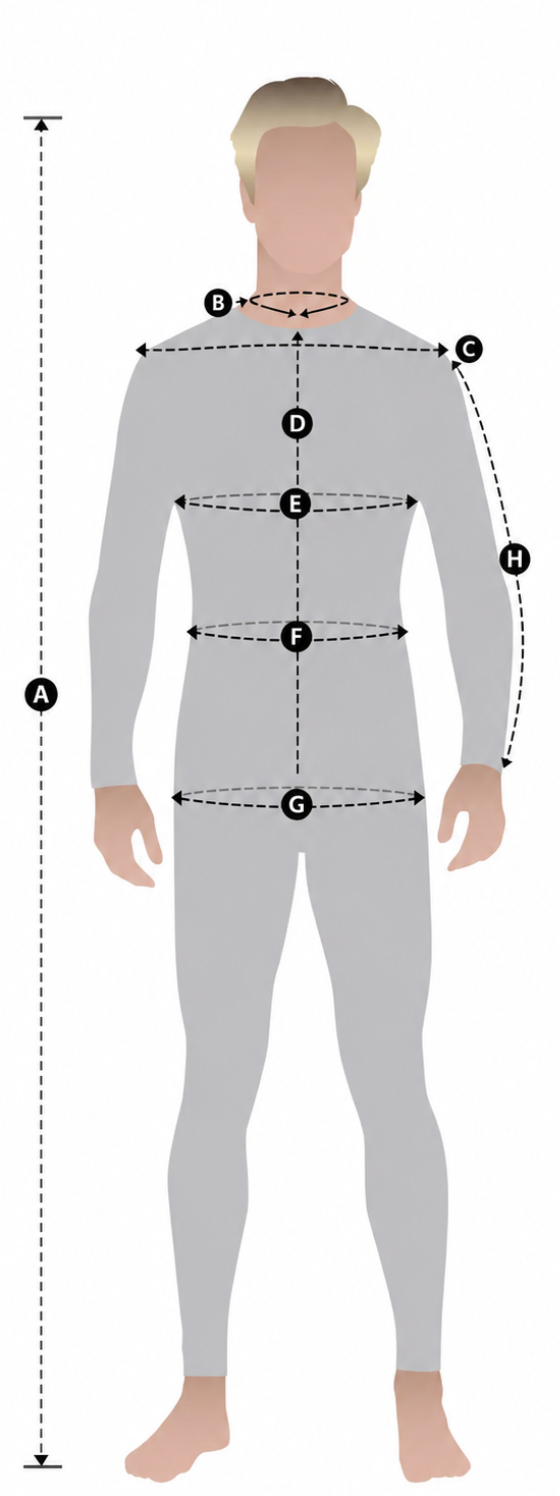
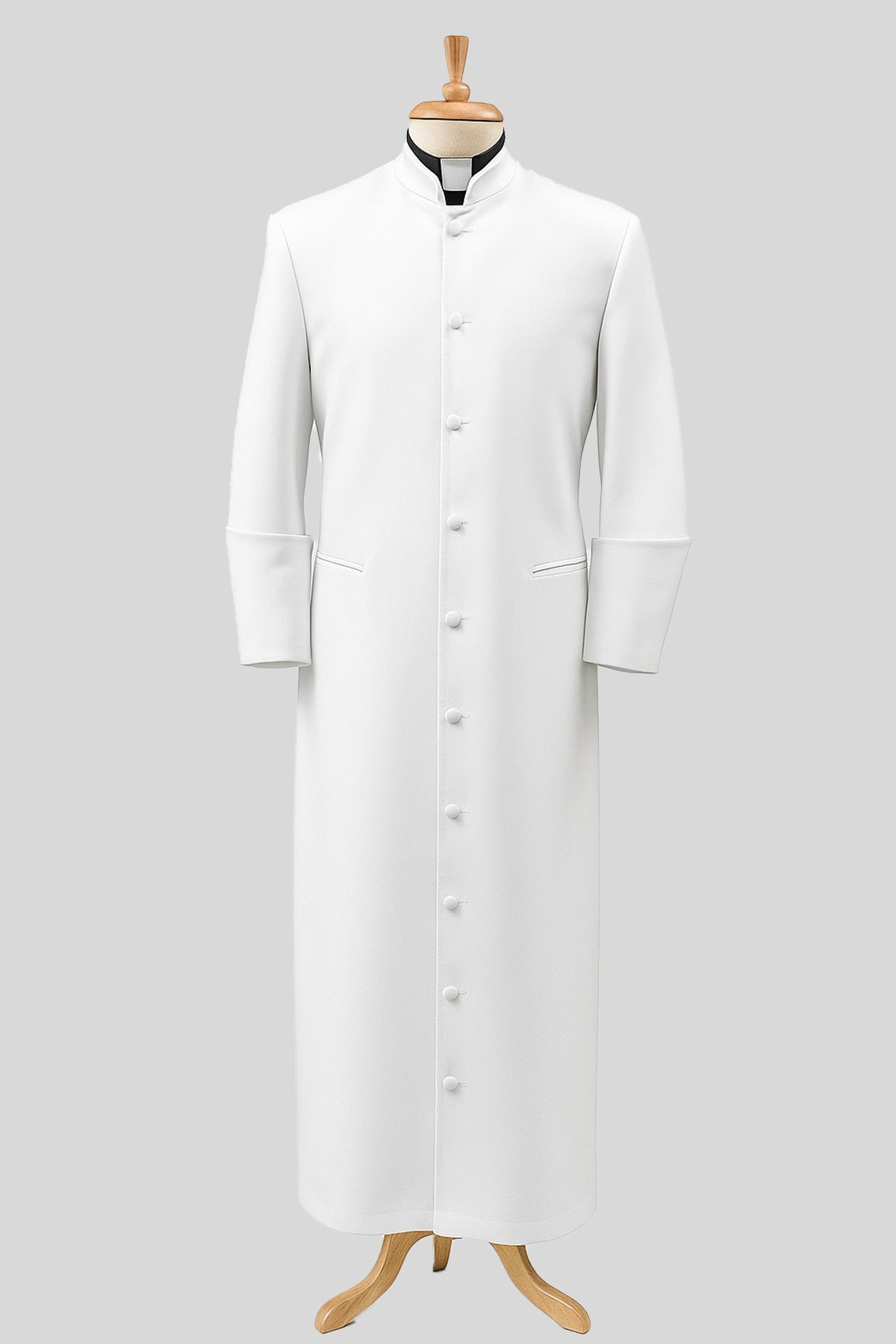

Pure White Pastor Robe for Men Classic Fit for Ceremonial Use
Price range: $ 189.99 through $ 249.99
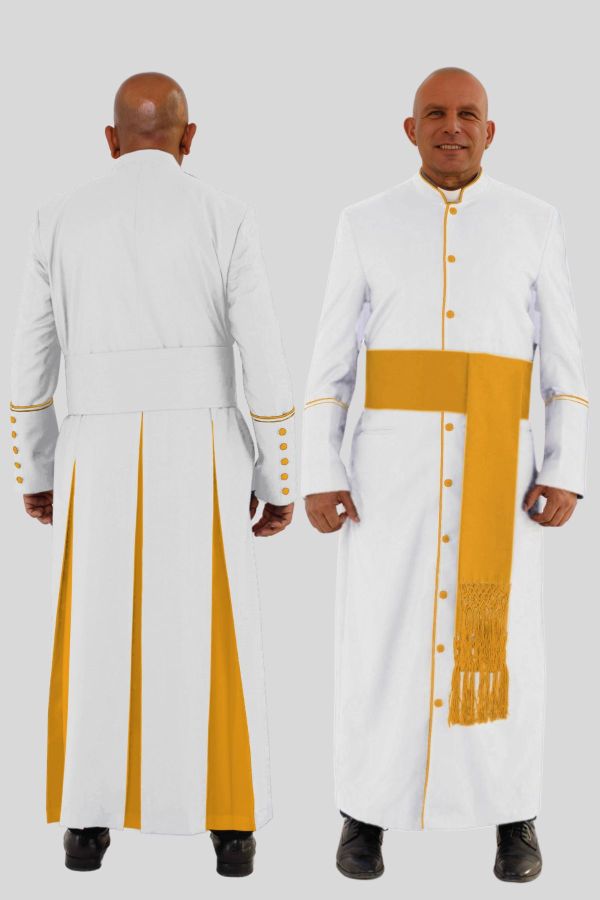
- The top-quality tropical fabric used for this cassock.
- Nine white fabric coverred buttons are used on front placket.
- Two inside breast pocket with two combination side openings.
- Three backplates are made at the back of the cassock.
- The ends of the cincture have knotted fringes.
- The perfect clergy white robe.
Classic White Clergy Robe for Sacred Occasions
White clergy robes, also known as clerical vestments, are a significant component of religious attire, particularly in Christian denominations. These white robes hold profound symbolism and meaning within the context of religious practices and services. Here’s a brief overview of white clergy robes:
Symbolism of Purity
White is often associated with purity, innocence, and light. In Christianity, it symbolizes the purity and holiness of Christ. When clergy members wear white robes, it serves as a visual representation of their commitment to leading a virtuous and blameless life, as well as their dedication to the teachings of Jesus.
Liturgical Significance
White robes are commonly worn during significant liturgical events, such as Easter and Christmas, as well as for baptisms and weddings. During these ceremonies, white vestments reflect the festive and celebratory nature of the occasion.
Baptism and New Beginnings
White is the traditional color of baptismal robes. When individuals are baptized, they are often clothed in white robes to symbolize their spiritual rebirth and the forgiveness of sins through faith in Christ.
Resurrection and Life After Death
In some Christian traditions, white robes are a symbol of the resurrection and the promise of eternal life. They connect the believer to the hope of life beyond death.
Unity and Communion
White robes can also represent the unity of the Christian community. When clergy wear white, it signifies their role in fostering unity among the congregation and promoting a sense of oneness in faith.
Variation Across Denominations
While the symbolism of white robes remains consistent, the style and specific design of these vestments may vary among different Christian denominations. For example, Roman Catholic priests often wear albs, while Anglican or Episcopal clergy may choose surplices.
FREQUENTLY ASKED QUESTIONS
What does a white clergy robe symbolize?
White is associated with purity, innocence, light, and the resurrection of Christ. In many churches white robes are worn at Easter, Christmas, weddings, baptisms, communion services, and funerals that celebrate eternal life. A pure white robe gives ministers a radiant, reverent appearance and reminds the congregation of joy and new life. It is a meaningful garment for celebratory and sacramental occasions.
How many buttons does the Pure White Pastor Robe have?
The front placket is fastened with nine white fabric-covered buttons. Because the buttons match the robe, the front looks clean and seamless, keeping the overall appearance pure white from collar to hem. Fabric-covered buttons give a refined finish and fasten securely, so the robe stays closed neatly while you walk, sit, or kneel during services and ceremonies. They are stitched securely for frequent wear.
Can I add a cincture belt to the white robe?
Yes. A cincture belt can be added for an additional charge using the option on the listing. Its ends are finished with knotted fringes, and it defines the waist for a traditional, complete look. If you prefer to use a colored cincture to match the liturgical season, leave the option set to No and pair the robe with a cincture you already own.
What pockets does the white robe have?
The robe includes two inside breast pockets and two combination side openings. The inside pockets keep a phone, pen, or notes secure, and the side openings let you reach your trouser pockets underneath without lifting the robe. This is a practical design for pastors who need essentials close at hand during services, receptions, and pastoral visits. Avoid overfilling them so the white fabric stays smooth and crease-free.
Why does the white robe have three back pleats?
Three pleats at the back provide extra fabric that opens when you raise your arms, bend, or sit, and then folds back neatly. This lets the robe move with you without pulling across the shoulders. The pleats also add a classic tailored detail. Made from top-quality tropical fabric, the robe is comfortable and keeps its shape throughout long ceremonies. It looks dignified in procession.
 Pure White Pastor Robe for Men Classic Fit for Ceremonial Use

 Verified owner
Wrong size received
 Verified owner
They send me wrong product