

In the world of religious attire, few garments are as symbolic and historically rich as the cassock. Often recognized as a long, ankle-length robe worn by clergy members, the cassock has been an essential part of the mens priest outfit for centuries. Beyond its practical use, the cassock carries deep spiritual significance and reflects a tradition that has shaped the visual identity of clergy around the world.
In this guide, we will explore the origins, types, and proper usage of the cassock, as well as answer common questions about wearing this iconic garment. Whether you are a clergy member, a seminarian, or simply interested in religious fashion, this article will give you a complete understanding of this timeless robe.
The Origins of the Cassock
The story of the cassock begins in the early centuries of Christianity. Unlike today, clothing in ancient times was not highly specialized. Long tunics were common among men of all social classes, including philosophers, officials, and religious figures. Over time, these everyday garments evolved into a distinct robe that became associated with clergy.
By the Middle Ages, the cassock had become a standard piece of clerical attire, symbolizing humility, dedication, and separation from secular life. Its adoption reflected both practicality and symbolism: the robe provided modesty, warmth, and ease of movement, while visually marking the wearer as a spiritual leader.
Today, the cassock continues to serve as a powerful emblem of faith and devotion, maintaining its place as a central component of the mens priest outfit across different Christian denominations.
The Components of a Cassock
A traditional cassock is made from a single piece of cloth, designed to flow gracefully from the shoulders to the ankles. While it may appear simple, every detail has significance:
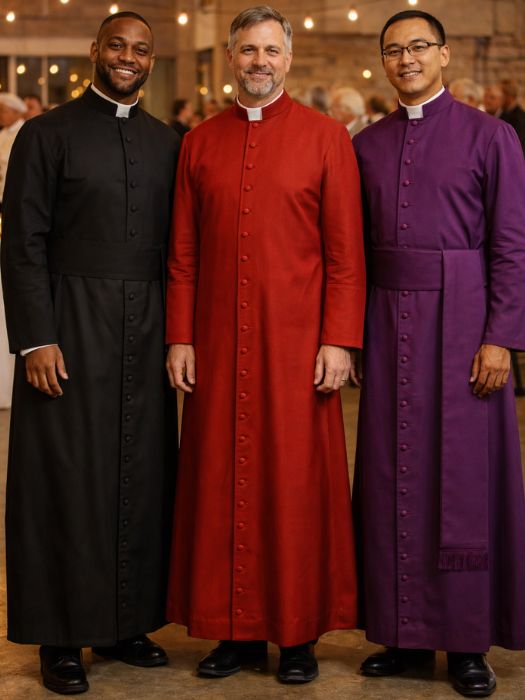
- Color: Black is the most common color, symbolizing humility and devotion, though variations like purple, red, or white may denote rank or special occasions.
- Buttons: Most cassocks feature buttons running from the collar to the hem, with the number and style sometimes indicating clerical rank. Mostly use fabric covered buttons.
- Collar: Often paired with a clerical collar, the cassock’s collar represents the clergy member’s commitment to their faith and calling.
- Belt or Sash: A cincture or sash may be used to secure the cassock at the waist, adding both style and function.
Understanding these components is essential for anyone looking to wear or appreciate the cassock as part of the mens priest outfit.
Types of Cassocks
Cassocks are not one-size-fits-all. Different Christian traditions and denominations have developed distinct styles:
- Roman Cassock: Characterized by a close-fitting design and usually black, it is most common in Catholic churches.
- Anglican Cassock: Often slightly looser, it may feature unique piping or colored buttons.
- Eastern Orthodox Cassock (Rason): Typically longer and more flowing, sometimes worn with a belt or overcoat.
Each style reflects the culture and spiritual focus of the denomination it represents. Choosing the right cassock is essential for both ceremonial accuracy and personal comfort.
How to Wear a Cassock Properly
Wearing a cassock is more than just putting on a robe, it is about respect, dignity, and tradition. Here are essential tips:
- Fit: Ensure the cassock fits comfortably at the shoulders and chest. A poorly fitting robe can disrupt movement and appear sloppy.
- Collar: Pair the cassock with the correct clergy collar or clerical neckwear for your denomination.
- Footwear: Simple black shoes or sandals are traditionally worn.
- Maintenance: Keep the cassock clean and pressed, as it represents both personal and clerical pride.
Following these guidelines ensures that the cassock enhances the wearer’s presence as a spiritual guide and leader.
Why Clergy Wear the Cassock
The cassock is a symbol of a life dedicated to service. Wearing this garment signifies:
- Humility: A visual reminder of the clergy member’s commitment to faith over worldly desires.
- Unity: It provides a recognizable identity across the global clergy community.
- Tradition: Wearing the cassock honors centuries of religious history and practice.
By donning the cassock, clergy communicate devotion, professionalism, and reverence, all essential aspects of the mens priest outfit.
Modern Adaptations of the Cassock
While the traditional cassock remains popular, modern clergy often seek practical adaptations:
- Lighter materials for warmer climates
- Slightly tailored designs for improved mobility
- Variations in color and accessories to reflect rank or event type
These adaptations ensure that the cassock remains both functional and symbolically significant in contemporary religious life.
Frequently Asked Questions (FAQs)
Who can wear a cassock?
Generally, cassocks are worn by ordained clergy, seminarians, and sometimes choir members, depending on the denomination.
Are there rules about colors?
Yes. Colors often signify rank or occasion. Black is standard, while red, purple, or white may be reserved for higher clergy or ceremonial events.
How should it be maintained?
Regular washing, pressing, and proper storage are key. A well-maintained cassock reflects respect for the tradition and the office it represents.
Who can wear a cassock?
Generally, cassocks are worn by ordained clergy, seminarians, and sometimes choir members, depending on the denomination. It represents both a spiritual role and adherence to tradition.
Is the cassock still worn by members of the clergy today?
Yes, the cassock is very much in use today. While some modern clergy may wear suits or simpler robes, the cassock remains a key part of formal church attire, especially during ceremonies, services, and official events. It continues to symbolize dedication, humility, and spiritual authority.
Why is the cassock typically made from black wool?
Black wool is traditional because it is durable, practical, and symbolizes humility and solemnity. Wool also keeps the wearer warm during long services in cooler climates, making it both a functional and symbolic choice for the mens priest outfit.
What are the colors of cassocks and their significance?
Colors of cassocks often indicate rank, occasion, or denomination:
- Black: Standard for most clergy, symbolizing humility and devotion.
- White: Often worn by priests in warmer climates or during special services.
- Red: Reserved for cardinals and high-ranking clergy.
- Purple: Indicates bishops or senior clergy members.
These colors communicate both tradition and the wearer’s position within the church hierarchy.
What is the purpose of a cassock?
The cassock serves multiple purposes:
- Symbolism: It represents a life dedicated to faith and service.
- Identity: It provides a recognizable, uniform appearance for clergy members.
- Practicality: The long robe offers comfort, mobility, and modesty during daily church duties.
- Tradition: Wearing a cassock honors centuries of clerical heritage and spiritual discipline.
How should it be maintained?
Regular washing, careful pressing, and proper storage keep the cassock neat and respectful. A well-maintained cassock reflects both personal pride and respect for religious tradition.
Conclusion
The cassock is a powerful symbol of faith, dedication, and tradition. As an essential part of the mens priest outfit, it connects clergy across generations and cultures, providing both practicality and profound spiritual meaning. Understanding the history, types, and proper way to wear a cassock allows anyone to appreciate the depth and significance of this timeless robe.


Add comment
You must be logged in to post a comment.