
What Is Clergy? Meaning, Types & Roles Explained
A plain-language guide to who counts as clergy, how church hierarchy is structured, and how sacred attire has come to represent each role.
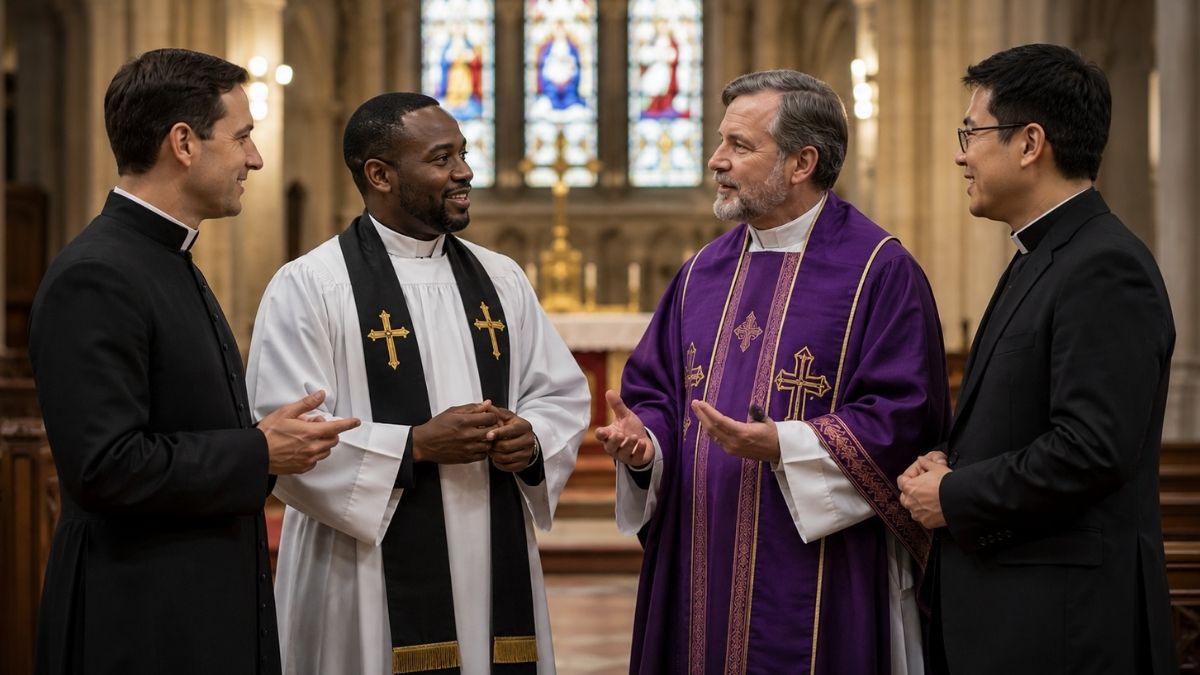
Clergy refers to the officially ordained or appointed leaders of a religious organization — such as priests, pastors, bishops, ministers, and deacons — who are authorized to perform religious rites, lead worship, and guide their congregation. The word is also used as a collective noun for the entire body of ordained officials within a church or faith tradition.
If you’ve ever searched “what is a clergy” or “clergy meaning,” you’re not alone — it’s one of the most common questions people ask about church leadership and structure. This guide breaks down exactly what clergy means, who counts as a clergy member, the different types of clergy across denominations, and how clerical attire has come to symbolize their sacred calling.
What Does Clergy Mean?
The clergy definition, at its simplest, is: the formally recognized religious leaders of a faith community, set apart through ordination or appointment to perform spiritual duties on behalf of that community.
The word “clergy” comes from the Old French clergié and Late Latin clericus, both rooted in the idea of belonging to a learned or sacred order. Today, clergy meaning extends across nearly every organized religion — Christianity, Judaism, Islam, and beyond — though the term is most commonly used in a Christian context to describe priests, pastors, ministers, bishops, and deacons collectively.
Importantly, “clergy” is a collective term. You wouldn’t typically say “a clergy” to describe one person — you’d say clergy member or clergyman/clergywoman. The word functions similarly to “staff” or “faculty”: it describes the group as a whole.
What Is a Clergy Member?
A clergy member is any individual who has been ordained, commissioned, or formally appointed to a religious leadership role within their tradition. This typically includes:
- Priests — who administer sacraments and lead Mass or liturgical services (Catholic, Orthodox, Anglican traditions)
- Pastors and Ministers — who preach, counsel, and lead congregations (Protestant traditions)
- Bishops — senior clergy overseeing a diocese or group of churches
- Deacons — clergy who assist priests and bishops, often focused on service and outreach
- Nuns and Monks — members of religious orders living under vows, though technically distinct from ordained clergy in many traditions
The term clergymen meaning is sometimes used interchangeably with “clergy member,” though it traditionally referred only to men. Many denominations today ordain women as well, so “clergywoman” and the gender-neutral “clergy member” are increasingly standard.
Clergy vs. Laity
Every religious community is generally divided into two groups:
- Clergy — the ordained leaders authorized to perform religious rites and lead worship
- Laity — the general membership of the church who are not ordained
This distinction matters because it defines who can perform certain sacraments, wear specific vestments, and hold formal leadership authority within the church structure.
Types & Ranks of Clergy
The clergy of the church is typically organized in a hierarchy, though the exact structure varies by denomination:
- 01Pope / Patriarch — the highest authority in Catholic and some Orthodox traditions
- 02Cardinal — senior church leaders who advise the Pope and elect his successor
- 03Archbishop / Bishop — oversee dioceses and multiple parishes
- 04Priest — leads individual parishes and administers sacraments
- 05Deacon — assists priests, often the first step toward priesthood
- 06Pastor / Minister — the equivalent leadership role in Protestant and non-denominational churches
- 07Monks and Friars — members of religious orders (Benedictine, Franciscan, Dominican, Carmelite, and others) living under vows of poverty, chastity, and obedience
Each rank carries distinct responsibilities — and, traditionally, distinct clerical attire that visually communicates that role during worship.
Clergy of the Roman Catholic Church
The clergy of the Roman Catholic Church follows one of the most detailed hierarchical structures in Christianity, moving from the Pope down through cardinals, archbishops, bishops, priests, and deacons. Each level has specific liturgical roles:
- The Pope serves as the Bishop of Rome and spiritual head of the global Catholic Church
- Cardinals are typically bishops appointed by the Pope who form the College of Cardinals
- Bishops govern dioceses and ordain new priests and deacons
- Priests serve individual parishes, celebrate Mass, and administer most sacraments
- Deacons may be transitional (on their way to priesthood) or permanent, assisting with baptisms, weddings, and community service
This hierarchy is reflected directly in traditional vestments — cassocks, chimeres, stoles, and pectoral crosses vary by rank, color, and liturgical season.
How Clergy Attire Reflects Sacred Roles
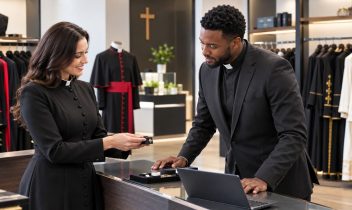
Clerical clothing isn’t just tradition for its own sake — it visually signals a clergy member’s role, rank, and the nature of the service being performed. At Holy Clergy, our collections are organized around exactly these distinctions:
To see how vestment colors and styles change with the liturgical calendar, read our posts on why clergy wear white on Easter Day and Pentecost and the significance of priest vestments. For a look at daily religious life beyond ordained clergy, see a day in the life of a nun.
Frequently Asked Questions
What is a clergy? +
“Clergy” is a collective term for the ordained or officially appointed leaders of a religious organization — such as priests, pastors, bishops, ministers, and deacons — who are authorized to lead worship and perform religious rites.
What is clergy? +
Clergy refers to the body of officials formally recognized to conduct religious duties within a faith tradition, as distinct from the general congregation (laity).
What does clergy mean? +
Clergy means the group of trained, ordained, or appointed religious leaders responsible for spiritual guidance, worship leadership, and administering sacraments within their church or denomination.
What do clergy mean in different denominations? +
The scope of who counts as clergy varies: Catholic and Orthodox traditions include priests, bishops, and deacons; Protestant traditions typically use “pastor” or “minister”; and some faiths include additional ranks such as cardinals, archbishops, or elders.
Is a nun considered clergy? +
Not exactly. Nuns and monks are members of religious orders who take vows, but in most traditions they are not “ordained” clergy in the way priests, deacons, and bishops are — though they hold a distinct and honored place within church life.
What’s the difference between a clergy member and a layperson? +
A clergy member has been formally ordained or appointed to lead religious rites and worship, while a layperson is a general member of the congregation without that formal ordination.
Outfitted for the calling you carry
Explore cassocks, robes, chimeres, and vestments crafted for pastors, priests, bishops, and ministers across every denomination.
Shop Clergy Robes & Vestments




Recent Comments