

Priest clothing does influence how a clergyperson is perceived, but it doesn’t manufacture respect on its own. What it does, when worn with intention, is make the invisible visible. It signals commitment, communicates identity and opens a door that personal character must then walk through.
A hospital chaplain walks into a ward wearing a clerical collar. A stranger in crisis at a bus stop sees a man in a black clerical shirt and approaches him. A grieving family at a funeral home recognizes a woman in clergy vestments and feels immediately that someone of authority and care has arrived.
These aren’t trivial moments. They’re ministry opportunities that begin before a single word is spoken.
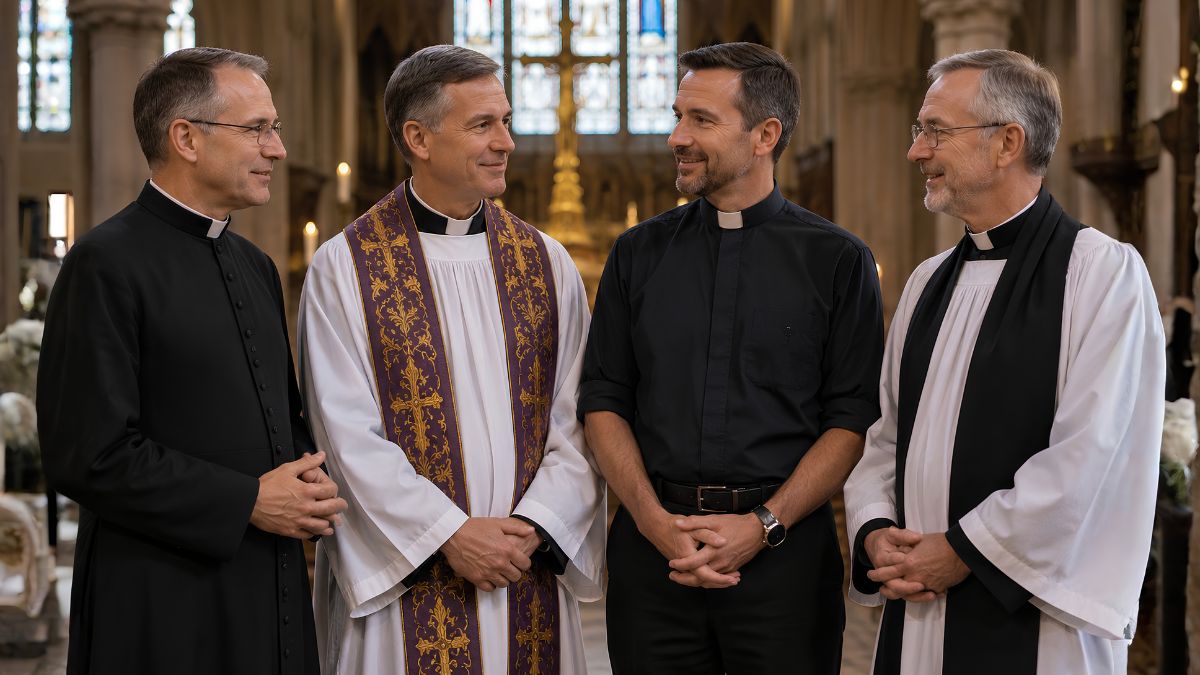
Priest clothing, whether that’s a traditional Catholic priest outfit, an Anglican clergy shirt with collar, or a simple black clerical suit, functions as an immediate social signal. It tells people: this person has a defined role, a community and a responsibility. That signal creates a specific kind of openness in strangers and congregants alike.
In environments where trust is low and time is short, visible clergy attire can be the difference between an encounter that leads somewhere and one that doesn’t happen at all.
What Clergy Attire Actually Communicates
There’s a practical language to clerical clothing that goes beyond denominational tradition.
Accountability. A priest or pastor in a recognisable priest uniform is, in some sense, wearing their role publicly. They’re not anonymous. The collar or the cassock says: you can find me, you can hold me to something. This matters in communities where institutional trust has been damaged, visible identification can be a quiet form of transparency.
Accessibility. Counter-intuitively, formal clergy wear often makes leaders more approachable, not less. People know who to go to. In a large church, a multi-site congregation or a public setting, recognisable ministry clothing removes the uncertainty of “I wonder if I should interrupt this person.” The barrier to approach drops.
Continuity. The traditions embedded in Catholic clergy clothes or Anglican clergy clothes weren’t invented to impress people. They developed over centuries as a way to express that ministry is larger than one individual that a priest steps into a role that existed before them and will continue after. When people sense that, it lends a particular kind of gravity to pastoral authority that casual dress rarely achieves.
The Anglican and Catholic Traditions: Purpose Behind the Garment
Different traditions have developed their clergy attire in distinct ways, and those differences reflect genuine theological emphases, not just aesthetic preference.
The Catholic Priest Outfit and What It Expresses
The traditional Catholic priest outfit, Roman collar, black clerical shirt or cassock, liturgical vestments for Mass is designed to minimise individual identity and emphasise the office. A Catholic priest dressed in full clerical attire isn’t presenting himself; he’s presenting the priesthood.
This design intention shapes how people relate to him. Parishioners who may struggle with personal trust after painful experiences in life often find that the formal garment creates a kind of safe distance, they are relating to the office first, the person second. That’s not dehumanising. It’s a particular form of pastoral care.
Catholic clergy clothes also serve a recognisability function that matters in pastoral emergencies. When a priest is called to administer last rites in a hospital, the clerical collar ensures he is identified and taken seriously by staff who’ve never met him.
How Anglican Clergy Clothes Balance Tradition and Accessibility
Anglican clergy clothes occupy an interesting middle ground. The clerical collar is standard, but the degree of formality varies significantly, from high church vestments to a collar shirt in a contemporary setting. This flexibility reflects a theological commitment to contextual ministry: meeting people where they are while maintaining visible continuity with the wider church.
Anglican clergy in collar shirts often report that the garment creates exactly the kind of low-threshold accessibility described above, formal enough to be identifiable, relaxed enough to invite conversation.
Both traditions illustrate that the priest uniform, however it’s expressed, serves a function that goes beyond the garment itself.
Does Clothing Create Respect or Reveal It?

Here is where the honest conversation has to happen.
Clergy attire can open a door. It cannot walk through it. A priest who dresses impeccably but treats people with coldness, dismissiveness, or dishonesty will find that the collar becomes a liability, people associate their negative experiences with the garment, and trust erodes faster than it would without the visible marker.
Respect, in ministry, is ultimately relational. It is built through consistency, presence, good judgment, genuine care, and the willingness to be wrong. No amount of beautifully tailored priestly garments can substitute for that.
What clothing does is set an expectation. And expectations, in ministry, are powerful, they shape how people arrive at an encounter, what they’re willing to share, and whether they feel they’ve been received properly.
When a pastor consistently dresses with care and consistency, their congregation begins to associate that consistency with their wider character. The attire becomes part of a recognisable pastoral identity, not because the clothes made the person, but because the person chose to take the signal seriously.
There’s a reason that ministers who suddenly abandon all clerical dress without explanation sometimes find it disorienting to their communities. The garment had become part of how people knew them. Removing it without conversation can feel, to a congregation, like a shift in identity, even when the pastor’s character hasn’t changed at all.
When Priests Clothing Actively Strengthens Trust
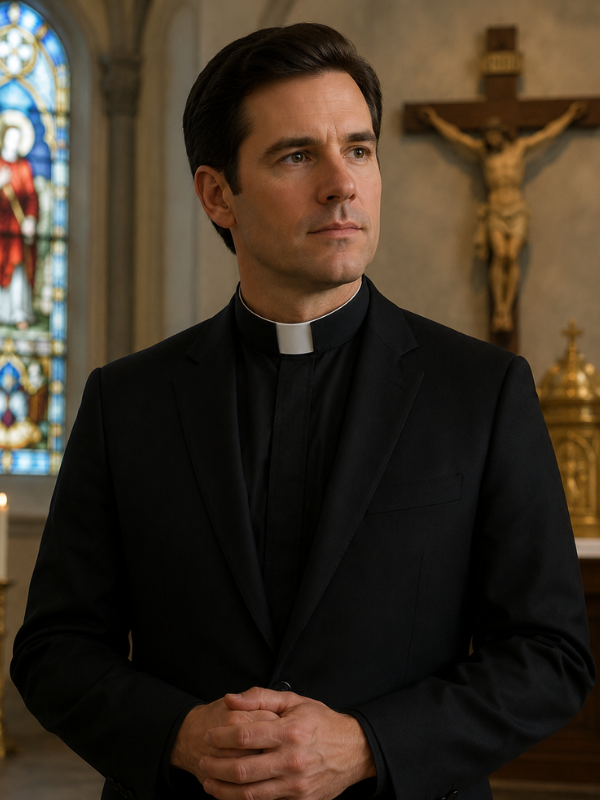
There are specific ministry contexts where visible clergy attire makes a measurable difference.
Pastoral care in public spaces. In hospitals, prisons, disaster response situations, or community crisis events, a recognisable clerical shirt or Catholic priest outfit allows a minister to be identified and accepted quickly by strangers, institutions, and vulnerable people who need immediate reassurance.
New congregations. When a church is growing and many members don’t yet know the clergy personally, visible pastoral attire helps newer attendees identify who holds pastoral authority. It reduces the low-level anxiety of not knowing who to turn to.
Interfaith and community settings. In public events, community meetings, or interfaith dialogue, visible clergy wear signals presence and representation. It communicates that the church has sent someone , and that someone takes the occasion seriously enough to come as themselves.
Young or questioning attendees. Interestingly, many younger adults who come to church with genuine questions but deep suspicion of institutions report that they appreciate visible clergy attire precisely because it removes ambiguity. They’d rather know who they’re talking to.F
The Argument for Thoughtful Simplicity
Not every context calls for full vestments. A youth worker in a Saturday morning programme does not need to be dressed like they’re about to celebrate Mass. A pastor who leads a contemporary church in jeans and a clerical collar has made a thoughtful choice about accessibility and context.
The question isn’t always “more formal is better.” The question is: does this person’s appearance communicate intentionality about their role? Is there visible acknowledgment that ministry is a serious calling, not just an informal hang?
That intentionality can be expressed through a simple Anglican clergy shirt as effectively as through a full Catholic cassock, provided it’s worn with awareness rather than routine.
Frequently Asked Questions
Should clergy wear clericals?
Yes, clergy are generally encouraged to wear clericals because it helps identify their role in the church and public ministry. Clerical clothing also reflects responsibility, visibility, and pastoral identity, making church leaders easily recognizable in community and service settings.
What are the five vestments a priest wears?
A priest typically wears vestments such as the amice, alb, cincture, stole, and chasuble during liturgical services. These garments are part of traditional clergy attire and are worn over regular clericals to reflect reverence and the sacred nature of worship.
What is another name for a priest’s robe?
A priest’s robe is commonly called a cassock. It is part of traditional clergy wear and is often worn as daily attire or under liturgical vestments depending on church practice.
What is a Catholic priest garment called?
A Catholic priest garment is often referred to as a cassock or clerical attire, depending on the context. For daily wear, priests may use clerical shirts, while for Mass they wear full liturgical vestments over their clergy clothing.
Do Anglican priests always wear robes?
No, Anglican priests do not always wear robes. Their attire depends on the service and setting. They may wear clerical collars and shirts in daily ministry and use full robes or vestments during formal worship services. This flexibility is part of Anglican clergy clothes tradition.
Conclusion:
Priest clothing can influence first impressions and help people recognise church leadership, but lasting respect comes from character, service, and integrity. Whether it is a Catholic priest outfit, Anglican clergy clothes, or another form of clergy attire, the purpose is not simply to look professional, it is to represent a calling. When worn with humility and authenticity, clergy clothing can strengthen trust, support pastoral presence, and remind communities that spiritual leadership remains visible and accessible.






Recent Comments